1. What are IQF Seasoned Mushrooms?
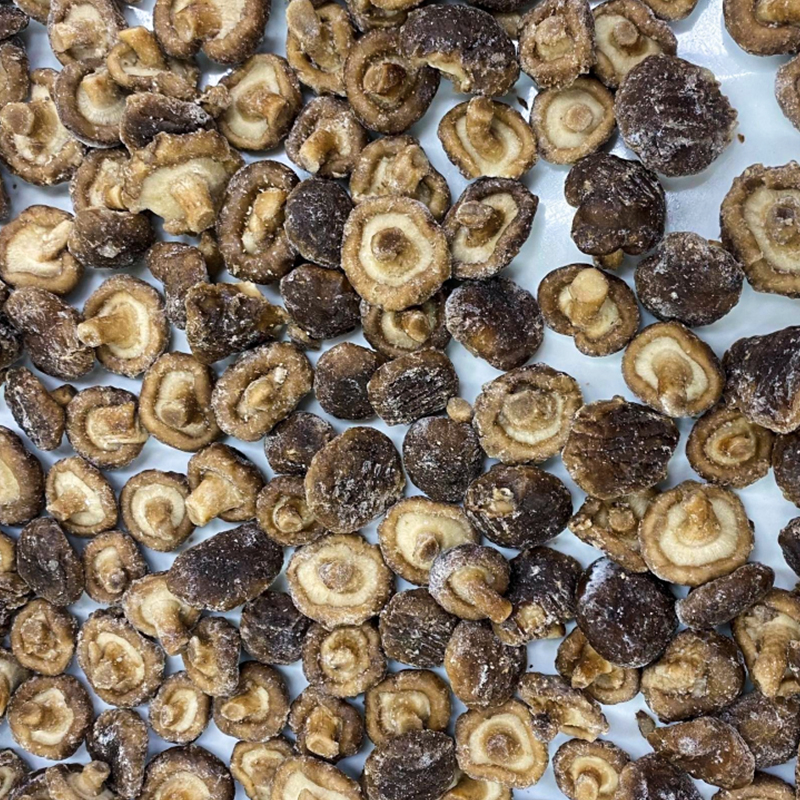
IQF seasoned mushrooms are pre-seasoned mushrooms processed using Individual Quick Frozen (IQF) technology. These mushrooms are made from fresh mushrooms that undergo rigorous cleaning, sorting, slicing, and seasoning, then flash-frozen at extremely low temperatures of -30°C to -40°C. Each slice is individually frozen in a high-velocity cold airstream, ensuring distinct, distinct mushrooms and a consistent texture.
The production process involves several precise steps: First, the raw materials are graded and screened to select high-quality mushrooms with intact caps and thick flesh. Next, the slices are standardized, typically to a thickness of 3-5mm. The seasoning process continues with the addition of salt, spices, and other seasonings according to a scientifically formulated ratio. Finally, the mushrooms are flash-frozen in an IQF tunnel. For example, Yuyao Gumancang Food Co., Ltd.'s seasoned vegetable production line utilizes an automated control system, ensuring a seasoning accuracy of no more than ±1.5%, and can process up to 2 tons of mushrooms per hour.
From a food physics perspective, the core advantage of IQF technology lies in its rapid passage through the zone of maximum ice crystal formation (-1°C to -5°C). During this process, the ice crystals formed within the mushroom cells are kept within a range of 50-80μm in diameter. These tiny ice crystals do not damage the cell wall structure. Studies have shown that the cell damage rate of IQF-treated mushrooms is less than 6%, compared to 30-35% with traditional freezing methods. This cellular integrity ensures that the product retains a texture and flavor profile close to that of fresh mushrooms after thawing.
In terms of microbiological safety control, pasteurization (75-80°C, 60 seconds) is used during production to keep the total colony count below 10³ CFU/g and the coliform count below 3 MPN/g, effectively preserving the product's nutritional value and flavor. Seasonings are carefully formulated, with a salt concentration of 1.2-1.8%, enhancing the flavor and acting as a natural preservative.
2. How should IQF Seasoned Mushrooms be packaged and stored after opening? After opening, IQF seasoned mushrooms require scientific storage methods to prevent quality deterioration and microbial contamination. Immediately transfer any unused product to a high-performance, airtight container. Use a vacuum sealer or manually to remove air before sealing. Food-grade polyethylene bags or glass containers are recommended, ensuring a water vapor transmission rate (WVT) of less than 3g/m²/24h and an oxygen transmission rate (OVT) of less than 10cm³/m²/24h.
Temperature management is crucial for maintaining quality. The refreezing process should be completed within 20 minutes, ensuring the core temperature of the product does not exceed -5°C. Thermodynamic studies have shown that recrystallization accelerates when the product temperature exceeds -5°C, with each freeze-thaw cycle increasing the average ice crystal size by 20-25%. It is recommended to set the freezer temperature below -18°C and use a temperature recorder to monitor temperature fluctuations to ensure they remain within ±1°C.
Packaging strategies require strategic planning. It is recommended to package the product in portions based on the intended serving size, with 100-200g per portion being ideal. Use sterilized tools when repackaging to avoid cross-contamination. Experimental data shows that properly repacked products experience a 40-50% lower rate of quality deterioration during storage than products stored in whole bags. After repackaging, the packaging should be dated and the "first in, first out" principle should be strictly adhered to.
Preventing flavor cross-contamination is equally important. Mushrooms have a strong odor absorption capacity and should be stored away from strong-smelling foods such as seafood and spices. Using activated carbon deodorizing packs or food-grade deoxidizers is recommended; these measures can increase odor absorption efficiency by over 60%. Furthermore, the relative humidity in the storage environment should be maintained at 85-90% to prevent freezer burn.
3. What is the maximum shelf life and optimal storage conditions for IQF Seasoned Mushrooms?
The shelf life and storage conditions of IQF Seasoned Mushrooms are determined based on multiple indicators from food chemistry and microbiology. Under a complete cold chain system (constant temperature of -18°C), the product's theoretical shelf life is 18-24 months, but the recommended best before date is 12 months.
From the perspective of lipid oxidation, mushrooms contain approximately 2-3% lipids, of which unsaturated fatty acids account for over 60%. At -18°C, the monthly peroxide value growth rate is controlled at 0.01-0.02 meq/kg. Using nitrogen-filled packaging technology can further reduce the oxidation rate by over 50%, ensuring that the peroxide value remains below the safety standard of 0.1g/100g even after 12 months of storage.
Color stability is another important indicator. Polyphenols in mushrooms may undergo enzymatic browning during frozen storage, but IQF treatment and low temperatures effectively inhibit polyphenol oxidase (PPO) activity. Experimental data show that after 12 months of storage at -18°C, the product's L* value (brightness) decreases by no more than 2.0, and the total ΔE color difference is kept within 3.5.
Flavor retention is satisfactory. Analysis using headspace solid-phase microextraction-gas chromatography-mass spectrometry (HS-SPME-GC-MS) showed that the retention rate of major volatile flavor compounds (such as 1-octen-3-ol and benzaldehyde) exceeded 85%. The monthly flavor loss during storage was no more than 0.3%, significantly superior to the 0.8-1.0% observed for traditional frozen products.
Temperature stability is a key factor in determining shelf life. Studies have shown that for every 5°C increase in temperature, the rate of quality deterioration increases by 2-3 times. When the storage temperature fluctuates by more than ±3°C, recrystallization occurs, accelerating softening. Therefore, it is recommended to use freezing equipment with a temperature alarm to ensure that the temperature is consistently maintained within the -18°C ±1°C range.
4. What should I do if IQF Seasoned Mushrooms are too juicy after thawing? How can I prevent my dishes from becoming watery?
Thawing water loss is a common phenomenon with IQF mushroom products, but it can be effectively controlled and utilized through scientific methods. First, we need to understand the mechanism of water loss: it's primarily caused by the inability of damaged cells to fully reabsorb cellular fluid after ice crystals melt. Research indicates that the ideal thawing juice loss rate for IQF seasoned mushrooms should be between 4-6%.
Temperature control is key to minimizing juice loss. A low-temperature, step-by-step thawing method is recommended: first, transfer the product from -18°C to -5°C for 2 hours, then transfer it to a refrigerated environment at 2-4°C for a slow thawing period of 4-6 hours. This method can keep juice loss below 4%, while rapid thawing at room temperature can reach 10-12%. During the thawing process, the product should be placed in a stainless steel strainer at a 15° angle to facilitate natural water separation.
It is recommended to utilize the remaining juice wisely. This juice is rich in flavor and nutrients, including soluble protein (0.4-0.6%), free amino acids (0.2-0.3%), flavor nucleotides (0.05-0.08%), and various minerals. The mushrooms can be collected and used as a base for sauces. Thickening can be achieved by adding 0.3-0.5% modified starch or 0.1-0.2% xanthan gum to create a rich, flavorful sauce.
Pre-cooking can also significantly reduce water loss. After thawing, dehydrate the mushrooms in a centrifugal dehydrator at 1000-1200 rpm for 60 seconds, or use a dedicated vegetable dehydrator to remove surface moisture. Experimental data shows that proper dehydration can reduce the amount of liquid in the final dish by 35-40% while increasing the concentration of flavor compounds by 25-30%.
For cooking techniques, it is recommended to use a high-temperature, quick stir-fry method, controlling the wok temperature at 180-200°C and shortening the cooking time to 2-3 minutes. This allows a protein coagulation layer to quickly form on the outside of the mushroom cells, effectively locking in the moisture inside. Adding absorbent ingredients such as wood ear mushrooms and tofu can also help absorb excess liquid and improve the texture of the dish.
5. Can IQF Seasoned Mushrooms be cooked directly in an air fryer?
IQF seasoned mushrooms can be cooked directly in an air fryer, but cooking parameters must be adjusted based on the air fryer's operating principles. Air fryers use high-speed circulating hot air to cook, typically reaching temperatures of 180-200°C and air speeds of 5-8 m/s. This cooking method places special demands on IQF products.
From a heat conduction perspective, when frozen mushrooms are placed directly in an air fryer, a porous structure quickly forms on the surface, facilitating the escape of internal moisture and resulting in a crispy texture. The recommended cooking temperature is 180°C for 10-12 minutes, with the mushrooms flipped 2-3 times during cooking to ensure even cooking. Experimental data shows that under these parameters, the product can achieve a crispiness of 2500-3000 g force, with a color ΔE value variation within 2.5.
Seasoning compatibility requires special attention. IQF seasoned mushrooms already contain a base seasoning. During air frying, the high temperature and airflow may cause uneven distribution of the seasoning on the surface. It's recommended to lightly spray mushrooms with a small amount of cooking oil before cooking (use 3-5ml/100g). This helps the seasoning adhere evenly and promotes the Maillard reaction, intensifying the flavor.
Preventing overdrying is a key challenge. Mushrooms have a water content of up to 90%, making them prone to excessive water loss during air frying. A staged heating method is recommended: first, heat at 160°C for 6 minutes to defrost the interior, then heat at 190°C for 4-5 minutes to create a crispy exterior. Alternatively, place a small amount of water (20-30ml) at the bottom of the fryer basket to generate steam and prevent the product from drying out.
In terms of nutrient retention, air frying offers distinct advantages. Compared to traditional deep-frying, air frying reduces fat absorption by 70-80%, increases B vitamin retention by 15-20%, and increases polyphenol retention by 25-30%. However, due to the high temperature, vitamin C loss can still reach 30-40%, so it's recommended to consume with fresh vegetables for vitamin supplementation.
Safety considerations are also crucial. To ensure complete cooking, the center temperature of the product should reach or exceed 75°C for 60 seconds. It should be consumed immediately after cooking to prevent it from becoming soft while being kept warm. It is recommended that you cook no more than two-thirds of the basket capacity at a time to ensure even circulation of hot air and prevent some of the product from being undercooked.



 English
 中文简体
中文简体 日本語
日本語