1. What is IQF cauliflower?
IQF cauliflower (Individually Quick Frozen Cauliflower) is a product of advanced food processing technology. Its core principle is the use of high-velocity airflow at extremely low temperatures (typically below -35°C) to freeze cleaned and cut cauliflower buds in a very short time (usually within minutes). The key is "individual rapidity":
Individual separation: Each bud separates from each other during the freezing process, preventing them from clumping together.
Quick freezing: Rapid freezing effectively inhibits excessive ice crystal growth, resulting in tiny ice crystals. This process helps to maximize the integrity of the cauliflower's cell structure, natural color, original flavor, and nutrients (such as vitamin C and dietary fiber).
2. What are the characteristics of high-quality IQF cauliflower?
High-quality IQF cauliflower products must meet several stringent physical and sensory specifications:
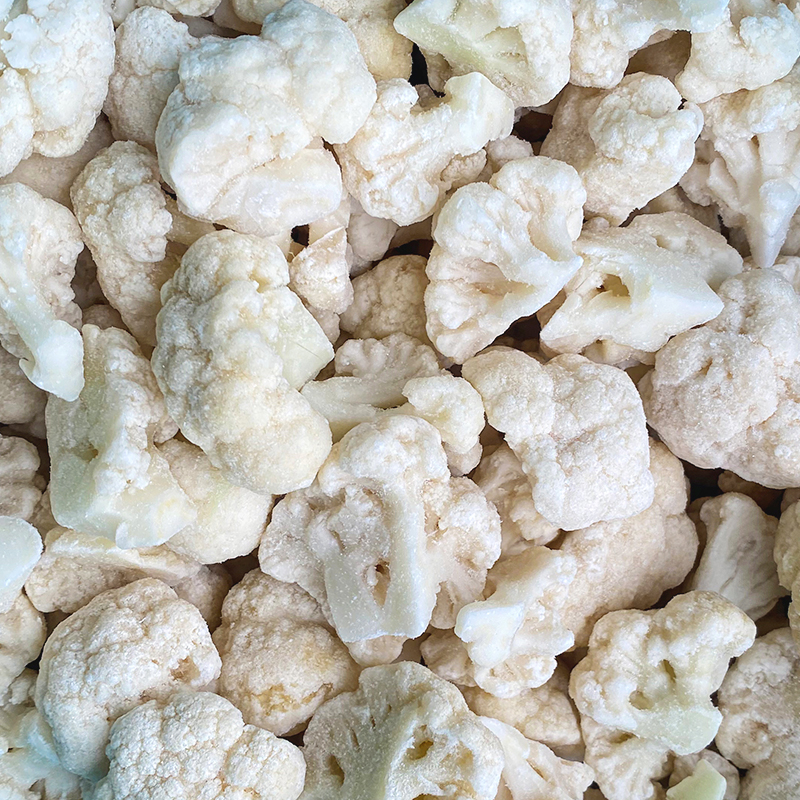
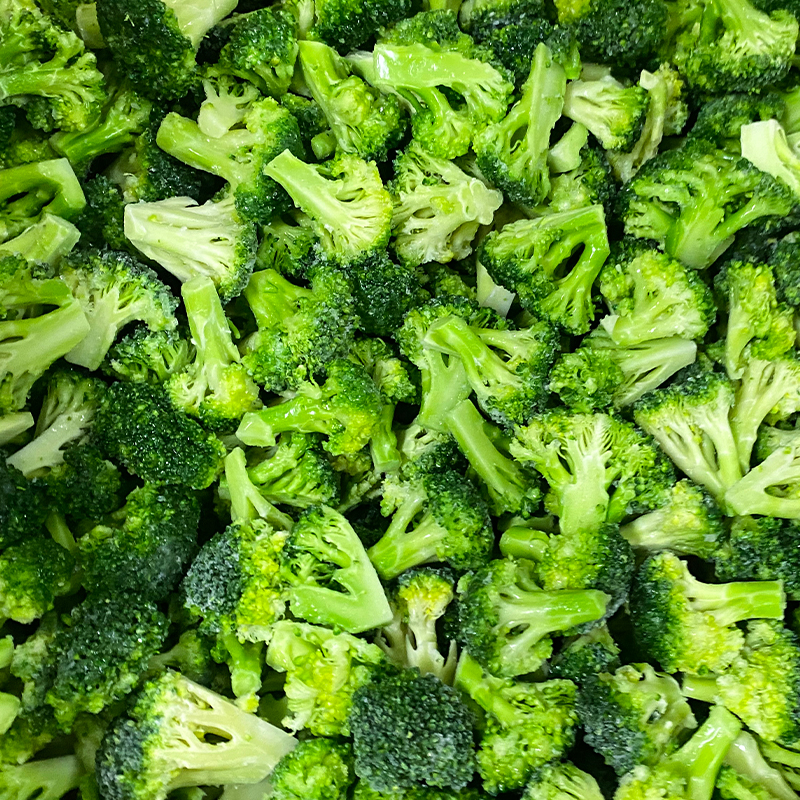
Appearance and Color: The buds are intact and uniform in size. The color should be the natural milky white or off-white color of cauliflower, with a uniform, natural tone and no large areas of browning, yellowing, or fading.
Texture and Structure: After thawing, the cauliflower should maintain a certain firmness and crispness, similar to the texture of fresh cauliflower, avoiding being soft or overly shrunken. The tissue structure should be intact, with no obvious breakage or fibrosis caused by freezer damage.
Purity: The product contains only cauliflower florets, with virtually no foreign matter (such as stem and leaf residue, impurities), and no pests.
Frozen State: The product should be loose and easily separable, with no noticeable lumps, frost, or ice (a slight surface frost is normal). There should be no excessive debris in the packaging.
Flavor and Aroma: After thawing and cooking, the cauliflower should exhibit the characteristic light flavor and aroma of fresh cauliflower, free of any unpleasant odors (such as rancidity or storage).
Industry Reference Capacity Example: A factory with large-scale production capacity is one of the fundamental guarantees of consistent quality. For example, Yuyao Gumancang Food Co., Ltd. has introduced three fully automated IQF production lines (one for aquatic products and two for vegetables), with an annual processing capacity of 8,000 tons of vegetables and 6,000 tons of aquatic products, and a daily storage capacity of 10,000 tons. Such large-scale, specialized production facilities are typically associated with strict quality control systems.
3. How to choose high-quality IQF cauliflower in supermarkets?
Consumers can use the following objective criteria to select high-quality IQF cauliflower at the retailer:
Packaging integrity: Prefer packaging that is intact, free of holes or leaks, and tightly sealed. Frost should be uniform and minimal within the bag.
Product visibility: Prefer transparent packaging or packaging with a visible window to allow for direct inspection of the contents.
Color: Observe the cauliflower for a uniform, naturally white color. Avoid products that are yellowish, dark, or have noticeable brown spots.
Condition: The product should be clearly loose and granular, with distinct buds and no visible clumping between individual pieces. Avoid products with noticeable large ice clumps or heavy frost inside the bag.
Purity: Visually inspect for visible impurities and foreign matter.
Production Information: Pay attention to the production date, expiration date, and manufacturer information on the packaging.
Storage Conditions: Ensure the supermarket freezer temperature is consistently maintained at -18°C or below, and that the product remains frozen and firm.
4. What are the main advantages and applications of IQF cauliflower?
IQF technology offers significant benefits to cauliflower:
Core Advantages:
Maximized Nutritional Preservation: Rapid freezing effectively locks in moisture, vitamins (especially heat-sensitive vitamin C), and minerals, significantly reducing nutrient loss compared to traditional slow freezing or long-term refrigeration.
Flavor and Texture Close to Fresh: Tiny ice crystals minimize mechanical damage to cell walls, resulting in a texture and flavor closer to fresh cauliflower after thawing.
Ease of Use: No need to wash or cut, individually frozen cauliflower allows for easy on-demand use. It can be cooked directly or simply thawed, saving meal preparation time. Supply Stability and Long Shelf Life: It transcends seasonal and regional restrictions, ensuring year-round supply. At -18°C, the shelf life typically reaches 12-24 months, reducing food waste.
Food Safety: Low temperatures effectively inhibit microbial growth and enzyme activity, ensuring food safety.
Main Applications:
Food Processing: Widely used as a pre-processed ingredient in frozen mixed vegetable packs, quick-frozen prepared foods (such as fried rice, pizza, and pasta sauces), prepared meals, soups, and baby food.
Food Service (group catering, fast food, and chain restaurants): Standardized ingredients ensure consistency, streamline kitchen processes, and improve food delivery efficiency.
Home Cooking: It can be used quickly and conveniently in stir-fries, curries, stews, salads (requires thawing), and baked goods (such as cauliflower pizza base).
5. What are the common quality defects of IQF cauliflower?
Understanding common defects can help you identify and avoid low-quality products:
Excessive clumping/sticking: Improper temperature, airflow, or time control during the freezing process, or temperature fluctuations during storage, can cause small buds to freeze into large clumps, making them difficult to handle.
Dehydration/Freezer Burn: Inadequate packaging or low humidity storage allows water to sublimate, resulting in a dry, whitish, porous, spongy surface and a tough, flavor-depleted texture. This is often accompanied by excessive frost.
Color Deterioration:
Browning: Enzymatic or non-enzymatic browning due to improper pre-treatment (such as insufficient or excessive blanching), slow freezing, or fluctuating storage temperatures, manifests as brown spots or an overall dull color.
Discoloration/Yellowing: Stale raw material or prolonged storage, leading to degradation of pigments such as chlorophyll and carotenoids.
Texture Deterioration:
Softness/Rottenness: Overripe raw material, excessive blanching, or severe damage to the cellular structure caused by freeze/thaw cycles.
Fibrillation/Lignification: Caused by aging raw material or poor storage conditions. Off-flavor: This may be caused by poor raw material quality, odor transfer from packaging materials, or odor contamination from other strong-smelling substances in the cold storage.
Oversized ice crystals/internal damage: Insufficient freezing speed results in large ice crystals forming inside and outside the cells, puncturing the cell walls. This leads to significant juice loss after thawing, resulting in a soft and unyielding texture.
Foreign matter/impurities: Inadequate raw material cleaning or processing controls may result in the inclusion of stem fragments, leaves, sand, gravel, metal fragments, etc.



 English
 中文简体
中文简体 日本語
日本語