1. IQF Edamame Varieties and Processing Suitability
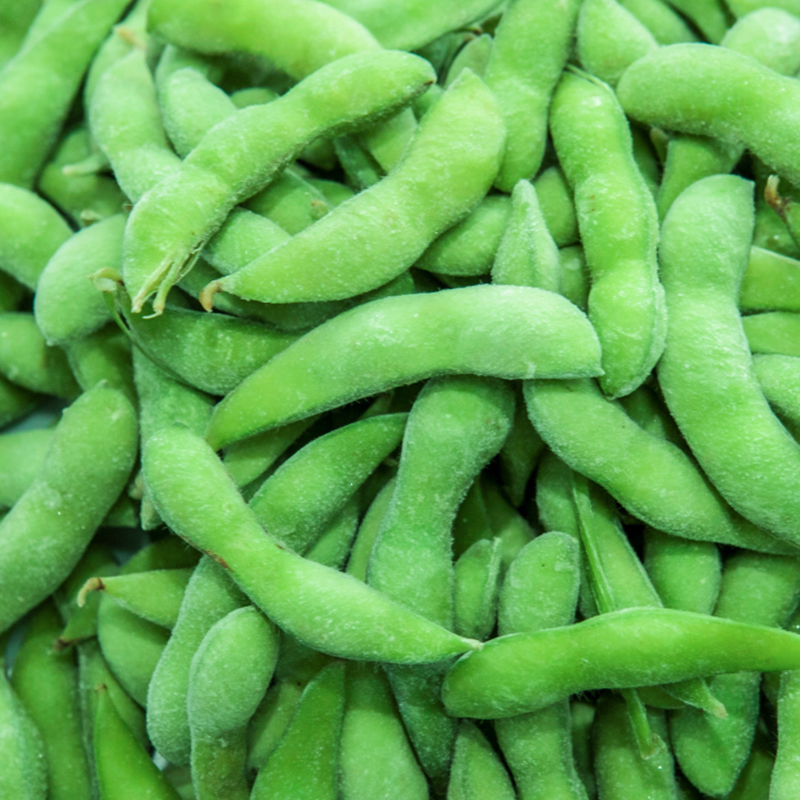
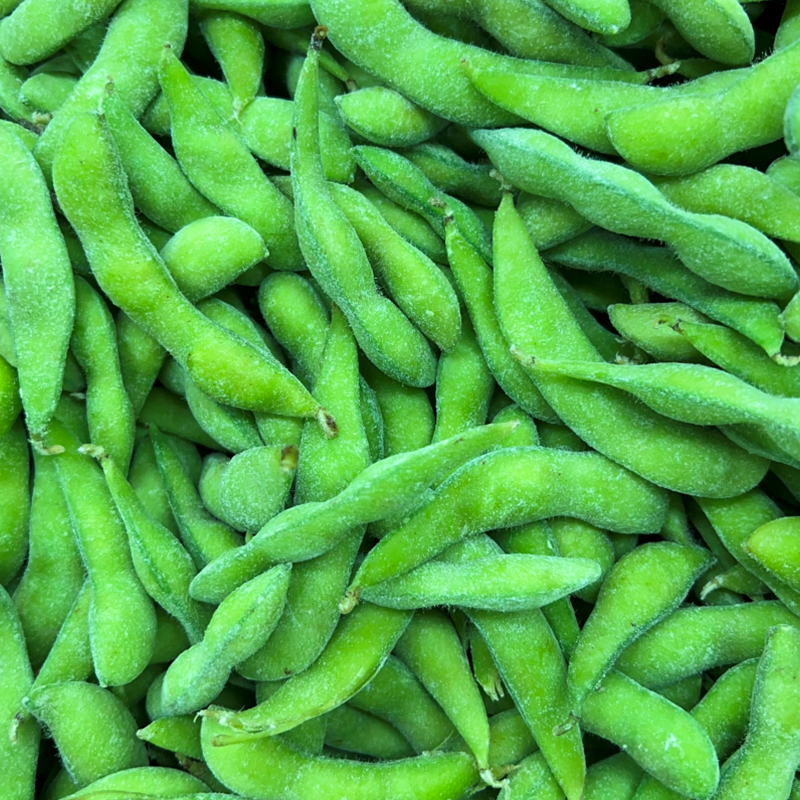
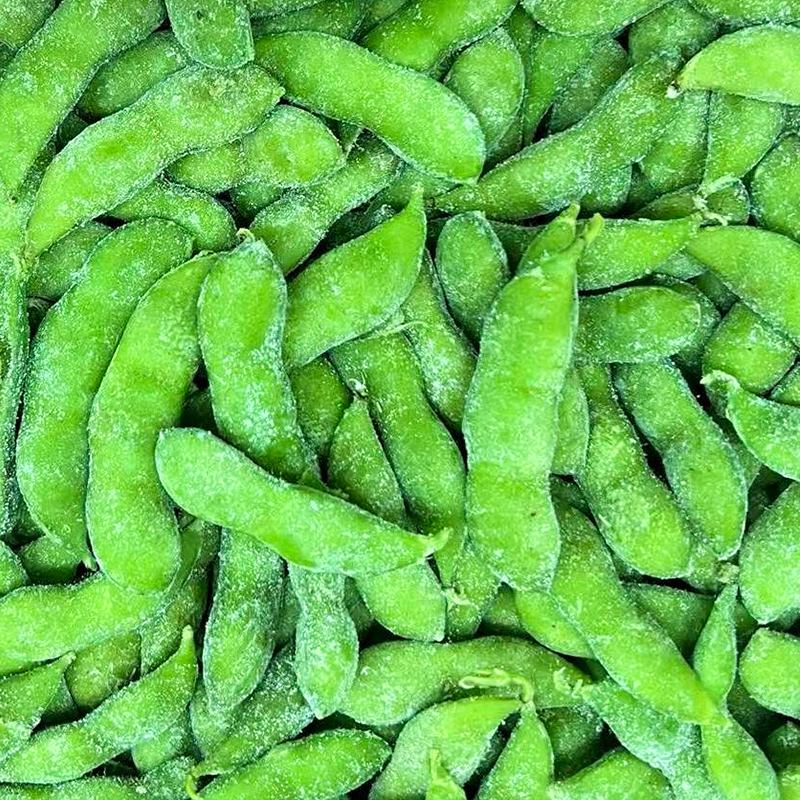
The processing suitability of IQF Edamame depends on the genetic characteristics of the variety. Key cultivated varieties include Yuasa Midori and Kaohime from Japan, and Zhexian No. 12 and Tainong 813 from China. These varieties have been systematically bred and exhibit significant differences in processing characteristics:
Sugar Composition and Flavor Characteristics: High-sucrose varieties (such as Yuasa Midori) can contain 6.5-7.2% sucrose, along with high levels of glutamic acid (≥120mg/100g) and aspartic acid, resulting in a unique sweet and fresh flavor. Certain varieties also contain specific volatile compounds, such as hexanal (a grassy aroma) and 2-pentylfuran (a bean-like aroma), which are retained at a rate exceeding 85% during the quick-freezing process.
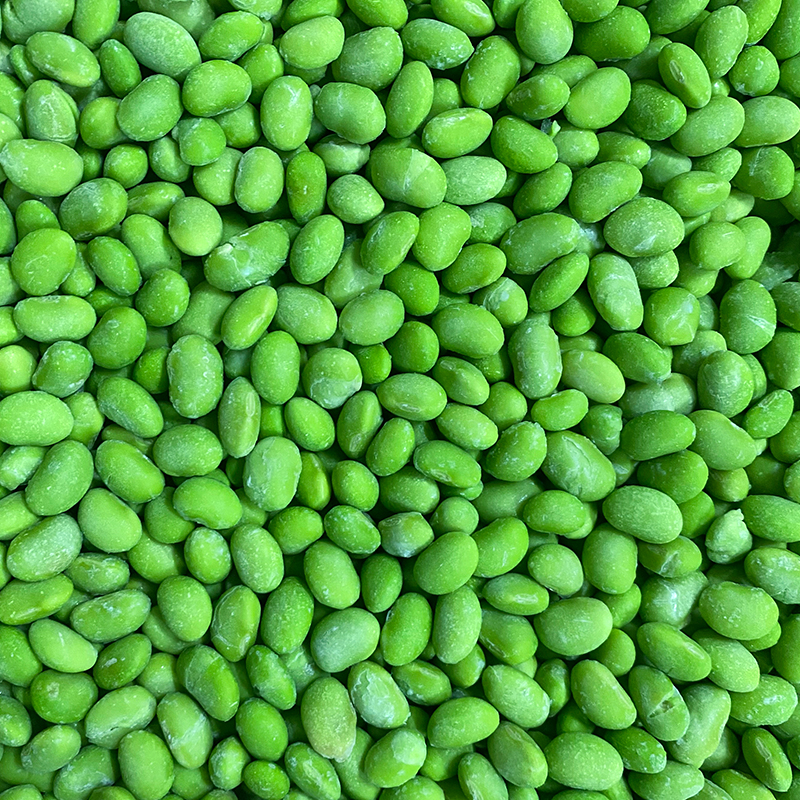
Physical Properties and Processing Suitability: Large varieties (100-kernel weight ≥ 35g) typically have pods ≥ 1.4cm wide and ≥ 5.0cm long, making them suitable for whole-pod processing. Small- to medium-sized varieties (100-kernel weight 20-30g) are more suitable for de-podded bean products. The variety's firmness index (≥ 8.0kg/cm²) and pectin content (≥ 0.8%) directly impact the product's texture retention.
Freezing Suitability: Ideally, the pod should be ≤ 0.3mm thick, with a waxy epidermal layer approximately 2-5μm thick, effectively reducing water evaporation. The bean's cell structure should be compact, with an intercellular space ratio ≤ 15%, which inhibits the formation of large ice crystals. A moisture content of 68%-72% and a soluble solids content ≥ 10° Brix are key factors in determining a variety's suitability for quick freezing.
2. Sensory and Physicochemical Indices of High-Quality IQF Edamame
Based on food industry standards and quality control systems, high-quality IQF Edamame should meet the following objective criteria:
Color: Quantified using the CIE Lab color space system, husk color should have an L* value of 40-45, an a* value of -12 to -15, and a b* value of 15-18. The chlorophyll a/b ratio should be maintained between 2.8 and 3.2, and the carotenoid content should be ≥ 5.0 mg/100 g. Color stability is directly correlated with peroxidase (POD) activity ≤ 0.5 U/g and polyphenol oxidase (PPO) activity ≤ 0.3 U/g.
Odor: Analyzed by headspace gas chromatography-mass spectrometry (HS-GC-MS), the key volatile compounds should contain the following: hexanal ≥ 50 μg/kg, 1-octen-3-ol ≥ 20 μg/kg, and 2-pentylfuran ≥ 15 μg/kg. Caproic acid (an indicator of rancidity) should not exceed 5 μg/kg.
Texture and Taste: Measured using a texture analyzer (TA.XT Plus), after standard cooking (100°C/3 min), the bean shear force should remain within the range of 25-35 N, the hardness should be 40-60 N, and the elasticity index should be ≥0.85. The starch gelatinization degree should be controlled at 60%-70%, and the soluble protein retention rate should be ≥80%.
3. Mechanism and Comprehensive Determination System of Freeze-burn
Freeze-burn is the result of complex physical and chemical changes and can be determined using a multi-parameter system:
Moisture Status Changes: The water activity (Aw) of frozen-burned products is typically below 0.65 (normal value 0.90-0.95), the bound water content decreases from the normal 5-10% to 2-3%, and the free water content increases significantly. Differential Scanning Calorimetry (DSC) can detect a decrease in the melting enthalpy of ice crystals by ≥20%.
Oxidation Indicators: The degree of lipid oxidation is characterized by multiple parameters: peroxide value (PV) ≥ 10 meq/kg, thiobarbituric acid residue (TBARS) ≥ 1.0 mg MDA/kg, and carbonyl value ≥ 20 mmol/kg protein. Vitamin E content is also decreased by ≥ 40%, and carotenoid loss is ≥ 30%.
Microstructural Changes: Scanning electron microscopy (SEM) observations revealed the appearance of surface depressions with diameters of 50-200 μm in freeze-burned samples, with intercellular spaces expanding to 2-3 times that of normal samples (reaching 30-50 μm). Cryosection microscopy revealed a cell wall rupture rate of ≥ 40%.
Spectroscopic Characteristics: Near-infrared spectroscopy (NIRS) analysis revealed characteristic absorption peaks at 960 nm and 1150 nm, and Fourier transform infrared spectroscopy (FTIR) revealed a characteristic carbonyl peak at 1740 cm⁻¹. These can serve as rapid, non-destructive detection indicators.
4. Application Scenarios and Technical Solutions
The application of IQF Edamame requires technological innovation tailored to specific scenarios:
Food and Beverage Industry Applications: Whole-pod products must maintain pod integrity of ≥95%, and the mechanical damage rate of shredded beans must be controlled to ≤3%. High-temperature, short-time (HTST) sterilization technology (121°C/30 seconds) combined with rapid cooling (to 4°C within 30 seconds) can achieve a total colony count of ≤10⁴ CFU/g and a coliform count of ≤10⁴ CFU/g.
Food Processing Applications: When used as an ingredient in prepared dishes, water activity adjustment (by adding sorbitol or trehalose) can be used to adjust the product's Aw value to 0.85-0.92, with a ΔAw value relative to the sauce packet controlled to ≤0.2. Electrostatic spraying technology can achieve a seasoning adhesion rate of ≥90% and a uniformity coefficient of variation of ≤15%.
Retail Product Innovation: Multi-layer co-extruded packaging materials (PET/AL/PE) are used, with a water vapor transmission rate of ≤3g/m²/24h (38°C/90% RH) and an oxygen transmission rate of ≤5cm³/m²/24h. Vacuum pre-cooling technology is recommended, reducing the product core temperature from 85°C to 4°C within 45 minutes, followed by IQF freezing to -18°C within 8 minutes.
5. Freezing Kinetics and Quality Control System
The thermodynamic characteristics of the IQF process have a decisive impact on product quality:
Ice crystal formation kinetics: When the freezing rate is ≥5°C/min, the ice crystal diameter can be controlled to 20-50μm, and the ice crystal number density is ≥10⁵/mm³. Using differential scanning calorimetry (DSC), the supercooling is ≤5°C, the ice crystal nucleation temperature is -12 to -15°C, and the time to pass through the maximum ice crystal formation zone is ≤4 minutes.
Nutrient Retention Mechanism: Rapid freezing ensures a vitamin C retention rate of ≥85% (slow freezing only 60%) and a chlorophyll degradation rate of ≤15%. Glass transition technology is used to rapidly bring the product temperature through the zone of maximum ice crystal formation (-1 to -5°C), keeping protein denaturation at ≤8%.
Quality Control Technology: Yuyao Gumancang Food Co., Ltd. utilizes computational fluid dynamics (CFD) to optimize the air flow system, ensuring uniform air velocity across the product surface (coefficient of variation ≤8%) and temperature fluctuations of ≤±1°C. The cold chain system utilizes ammonia refrigeration and ethylene glycol secondary heat exchange, achieving a temperature control accuracy of ±0.5°C.



 English
 中文简体
中文简体 日本語
日本語