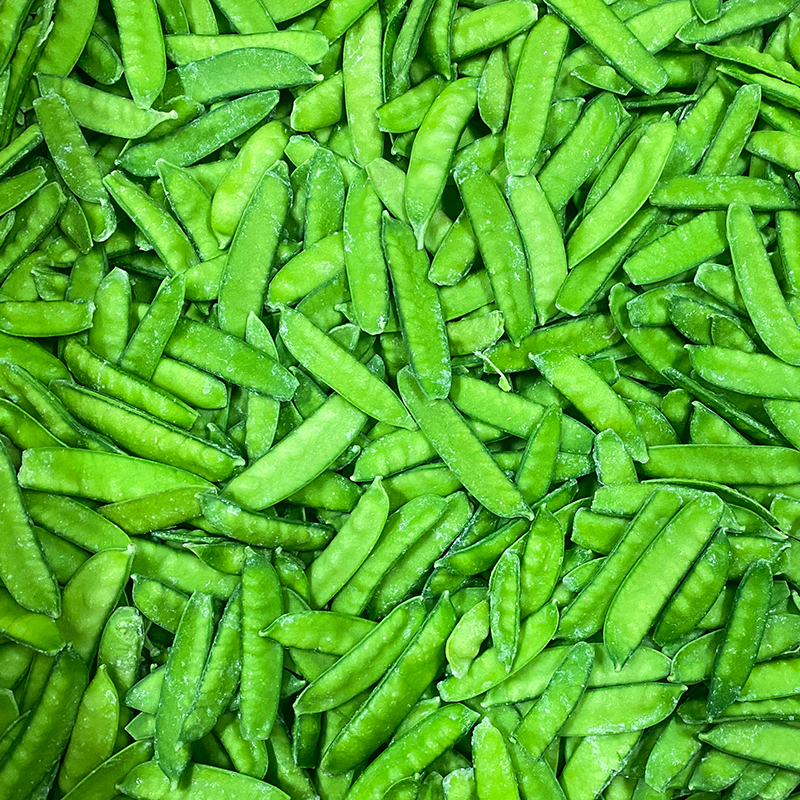
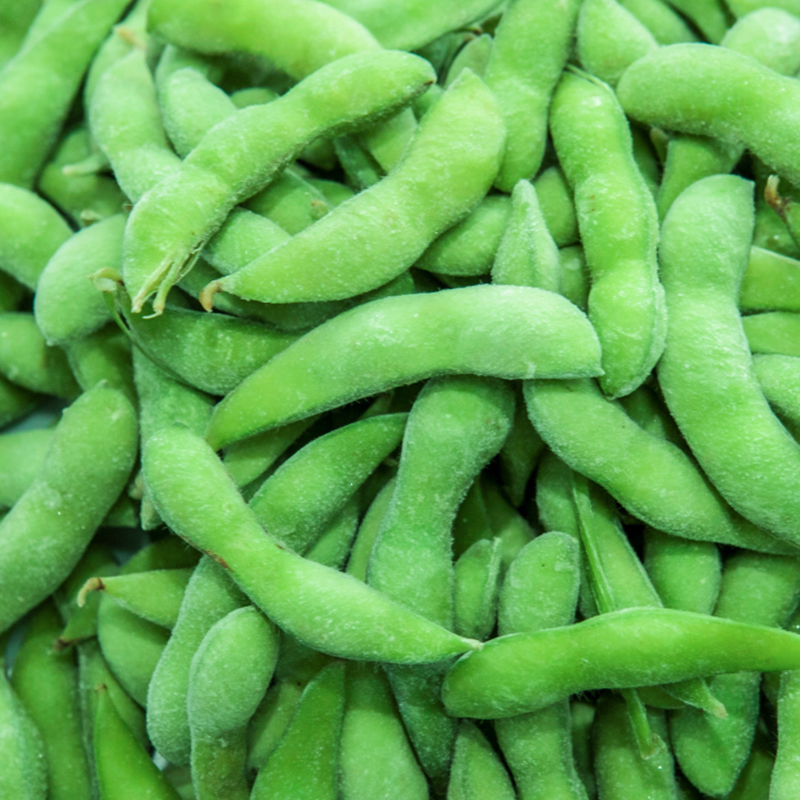
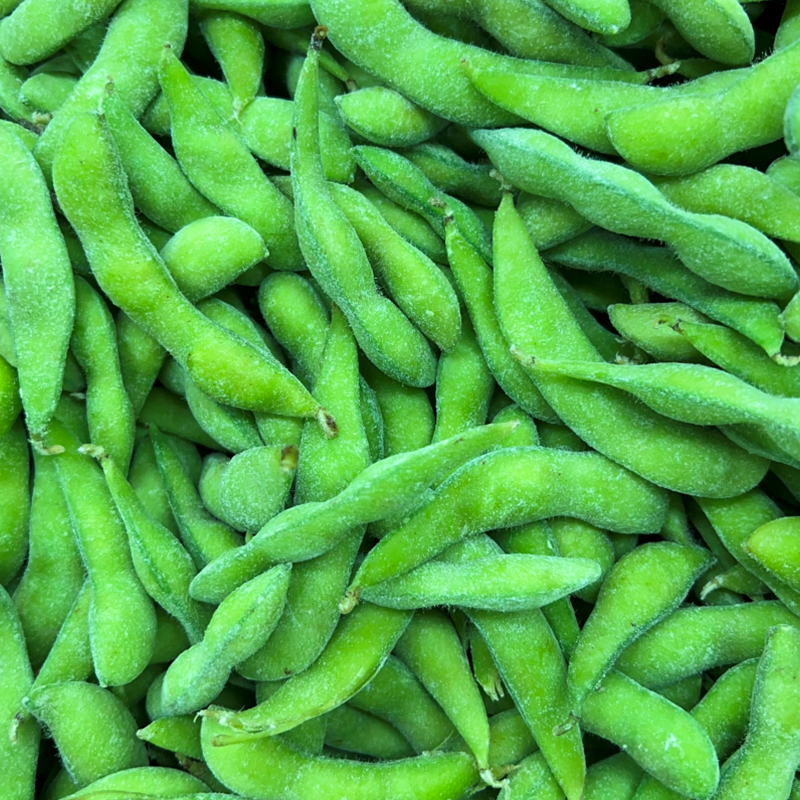
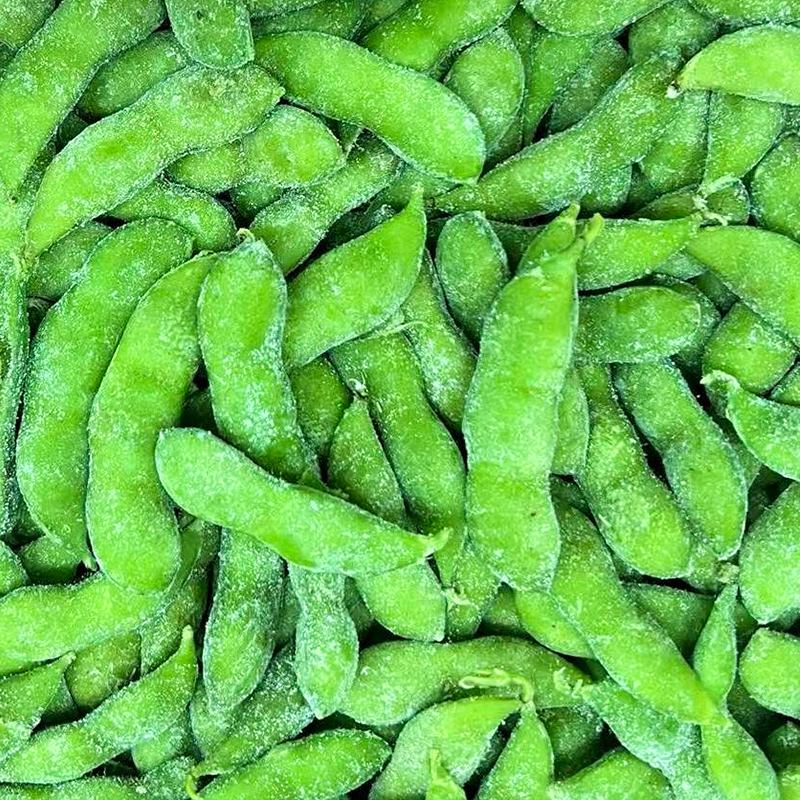
1. What are IQF Pea Pods?
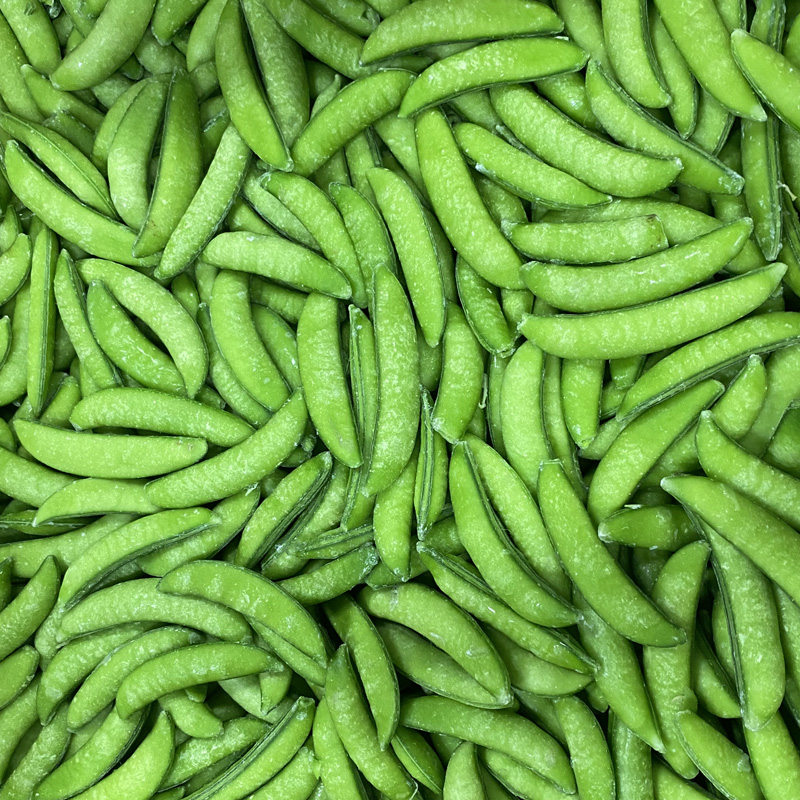
IQF Pea Pods, also known as "Individually Quick-Frozen Sweet Pea Pods" in Chinese, are whole or cut pea pods processed using advanced freezing technology. The core of this process lies in the "IQF" process, which stands for "Individual Quick Freezing."
Unlike the traditional method of slowly freezing large quantities of product by piling them together, the IQF process requires that pea pods, once entering the freezing line, be separated and placed on cold beds. These pods are then exposed to high-velocity airflow at extremely low temperatures (typically below -30°C). This process forces the moisture within the pods to pass through the zone of maximum ice crystal formation within a very short period of time (typically minutes), forming countless tiny, almost invisible ice crystals.
This rapid freezing process is crucial. Because the ice crystals are so small, they are unable to pierce the cell wall structure of the pod, thereby maximizing cell integrity. The result is that each pod is individual, loose, and non-sticky, with its shape, color, taste, and flavor highly preserved in the frozen state. Consumers can simply take the desired amount without tools, and the remainder can be quickly returned to the freezer, preventing quality deterioration caused by repeated thawing.
Professional food manufacturers, such as Yuyao Gumancang Food Co., Ltd., have invested significant technological resources in this area. The company has introduced three fully automated IQF production lines (one for aquatic products and two for vegetables), with an annual processing capacity of 8,000 tons of vegetables and 6,000 tons of aquatic products, and a daily storage capacity of 10,000 tons. This large-scale production ensures that the entire process from raw materials to finished product adheres to the business philosophy of "people-oriented, scientific management, health first, and customer first." The company also undergoes a rigorous quality management system to meet market demand for high-quality IQF vegetables.
2. What is the difference between IQF Pea Pods and traditional frozen peas?
While IQF sweet pea pods and traditional frozen pea kernels (usually referring to frozen green pea kernels) are both frozen pea products, they differ fundamentally in product form, processing, taste, texture, and intended use.
Product Form and Parts:
IQF Sweet Peas: Use the entire edible pea pod, including the pod itself and the unripe pea seeds inside. Characterized by plump, crisp, tender, and sweet peas.
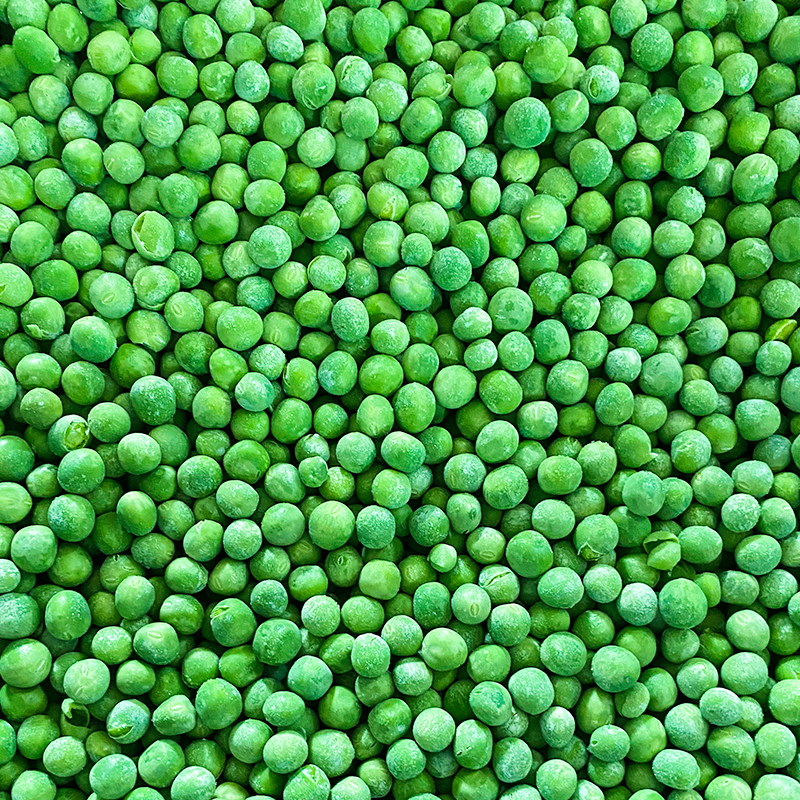
Traditional Frozen Peas: Typically, only the mature pea seeds are used, removed from the pod; the pod is considered inedible and discarded.
Processing:
IQF Process: As described above, individual peas are rapidly frozen, resulting in a loose, individual product. This minimizes cell structure damage and better preserves the original crisp and tender texture.
Traditional Freezing Process: Often slow freezing or tray freezing is used, which can cause large amounts of pea seeds to freeze into lumps. The slow freezing process can easily form large ice crystals that puncture cell walls, resulting in a soft texture after thawing, loss of juice, and a floury texture that lacks crispness.
Taste and Flavor:
IQF Sweet Peas: After thawing or cooking, they retain their characteristic crispness and sweet flavor, more closely resembling the experience of fresh sweet peas.
Traditional Frozen Peas: They have a soft, chewy texture, with the flavor focusing on the sweetness of the kernel, but lacking the crispness and depth of flavor.
**Culinary Uses:**
IQF Sweet Peas: They are ideal for stir-frying, blanching and serving cold, adding to salads (after thawing), or adding to soups and cooking briefly to highlight their crispness.
Traditional Frozen Peas: They are commonly used in pea purees, stews, fried rice, soups, or as a side dish. Their chewy texture blends easily into and thickens dishes.
In short, IQF sweet peas preserve the original form and texture of the vegetable more completely, while traditional frozen peas focus more on preserving the energy contained in the seeds. Each has its own advantages and is suitable for different dietary scenarios.
3. Who is suitable for IQF Pea Pods?
Due to their convenience and nutrient retention, IQF sweet pea pods are widely adaptable and suitable for people of all ages and with diverse needs.
Busy urban professionals: For those with a fast pace and limited cooking time, IQF sweet pea pods require no washing or cutting; they can be cooked directly from the freezer, greatly simplifying meal preparation and providing an efficient solution for ensuring daily vegetable intake.
Those concerned about health and weight management: Sweet pea pods are low in calories and rich in dietary fiber, which promotes satiety. They are also a good source of vitamin C, vitamin K, vitamin A (in the form of beta-carotene), manganese, and folate. IQF technology ensures that they offer nutritional benefits close to fresh vegetables even when they are not in season, making them an excellent component of a healthy diet.
Infant and toddler complementary foods and school-age children: Their natural sweetness and crisp texture are easily enjoyed by children. Pureed, they can be used as complementary foods for infants and toddlers, providing a variety of vitamins and minerals. For school-age children, it's a colorful, nutritious, and healthy choice for both meals and snacks.
For seniors with weak teeth: By extending the cooking time appropriately, IQF sweet pea pods can become very soft and easy to chew and digest. They also provide essential dietary fiber and trace elements for seniors, helping to maintain intestinal health.
For cooking enthusiasts and professional chefs: For the catering industry, which requires a stable supply of high-quality ingredients year-round, IQF sweet pea pods ensure consistent taste and appearance, regardless of season, region, or sourcing channels. This provides a reliable guarantee for menu development and stable production.
4. How does IQF technology preserve the freshness and flavor of pea pods?
The key to preserving freshness in IQF technology lies in precise control of "time" and "temperature." The scientific principles behind this technology are primarily reflected in the following aspects:
Minimizing enzyme activity: After harvesting, biochemical reactions within vegetables continue. Enzymes can cause nutrient loss and alter color and flavor. While blanching (blanching) pretreatment inactivates most enzymes, rapid freezing provides a second layer of protection. The rapid freezing significantly slows the rate of any remaining chemical reactions, putting the pods into a "dormant" state.
Forming tiny ice crystals and protecting cell structure: This is the core advantage of IQF technology. As water within cells slowly freezes, it gradually forms larger ice crystals. These ice crystals act like sharp needles, piercing cell walls and membranes. Once the cell structure is disrupted, the intracellular fluid leaks during thawing (juice loss), resulting in a soft, mushy product with a poor taste and flavor.
In contrast, IQF's ultra-rapid freezing prevents water from coalescing into large ice crystals, resulting in a large number of evenly distributed tiny ice crystals. These micro-ice crystals cause minimal mechanical damage to the cells, perfectly preserving their original integrity. After thawing, the cells remain plump and firm, locking in texture, juice, and flavor.
Preventing Oxidation and Microbial Growth: Extremely low temperatures and reduced water activity effectively inhibit the growth and reproduction of microorganisms. Furthermore, low temperatures slow the oxidation process, preventing the pods from yellowing, browning, and developing unpleasant flavors due to oxidation, allowing them to retain their vibrant green color from the moment they were picked.
Preventing Clumping and Preserving Individual Flavor: Individually Quickly Freezing (IQF) ensures that each pod is rapidly frozen and individually packaged. This prevents pods from clumping and forming large ice clumps on contact surfaces, ensuring that each pod is preserved at its optimal state without affecting or losing flavor.
The entire process—from raw material selection, rapid transportation, cleaning, blanching, and final IQF freezing—is a meticulously integrated system whose sole purpose is to "preserve" vegetables at their peak state, both in time and space.
5. What is the proper way to store IQF Pea Pods?
Proper storage is the final critical step in ensuring the high quality of IQF sweet pea pods from factory to table. Improper storage can easily lead to freezer burn and quality deterioration.
Maintain a constant low temperature: The freezer compartment of a household refrigerator should be set and maintained at -18°C or lower. This temperature is internationally recognized as a safe temperature for long-term storage of frozen foods, effectively inhibiting microbial activity and enzymatic reactions. Avoid frequent opening and closing of the refrigerator door, which can cause temperature fluctuations. This can cause ice crystals to sublime and recrystallize inside the product, accelerating freezer burn.
Preventing "freezer burn": "Freezer burn" is not a true burn; it refers to a phenomenon in which the surface of food becomes dry, discolored, and rough due to sublimation of moisture. It is primarily caused by exposure to the dry air in the freezer. To prevent this phenomenon:
Keep the original packaging sealed: Factory packaging generally provides excellent moisture and air barrier properties. After each use, immediately squeeze out the air from the packaging and reseal it tightly.
Use airtight containers: If the original packaging is damaged, transfer the pods to a sealed freezer bag or airtight container. When using fresh-keeping bags, try to remove as much air as possible.
Follow the "first in, first out" principle: Although IQF foods have a longer shelf life (typically 18-24 months), it's still important to check the expiration date on the packaging after purchase and plan your consumption accordingly, consuming the items purchased first first to ensure the best possible experience.
Avoid repeated thawing and freezing: This is the most important point to keep in mind. Repeated thawing and freezing completely destroys the benefits of IQF technology. Each thawing causes ice crystals to melt, draining cell juices; refreezing results in larger ice crystals, severely damaging the cell structure and compromising the taste. Therefore, plan your portions and never return them to the freezer once you've taken out the required amount.



 English
 中文简体
中文简体 日本語
日本語