1. What are IQF Green Beans Cut?
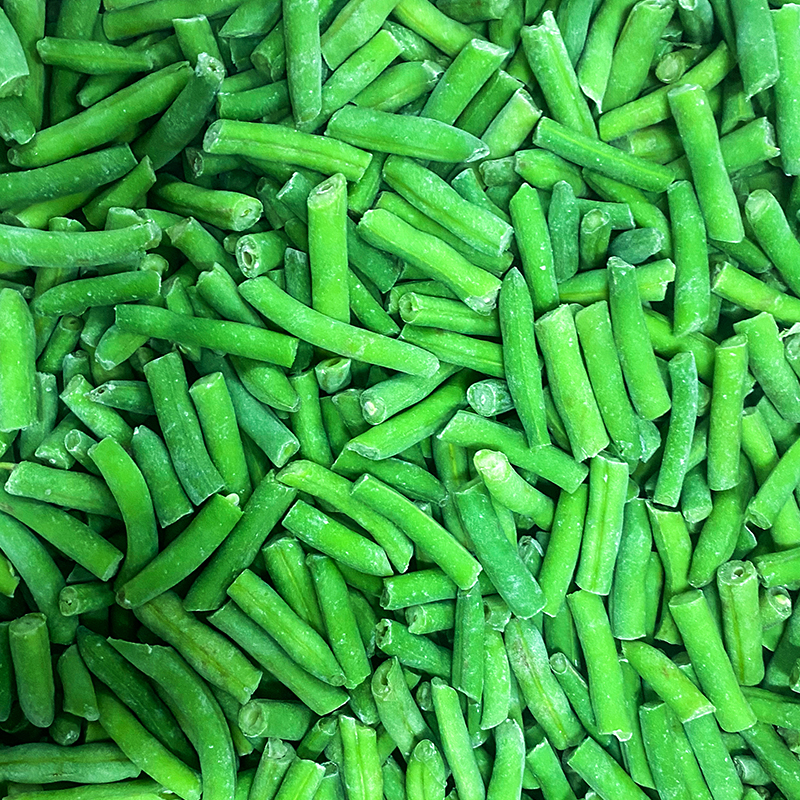
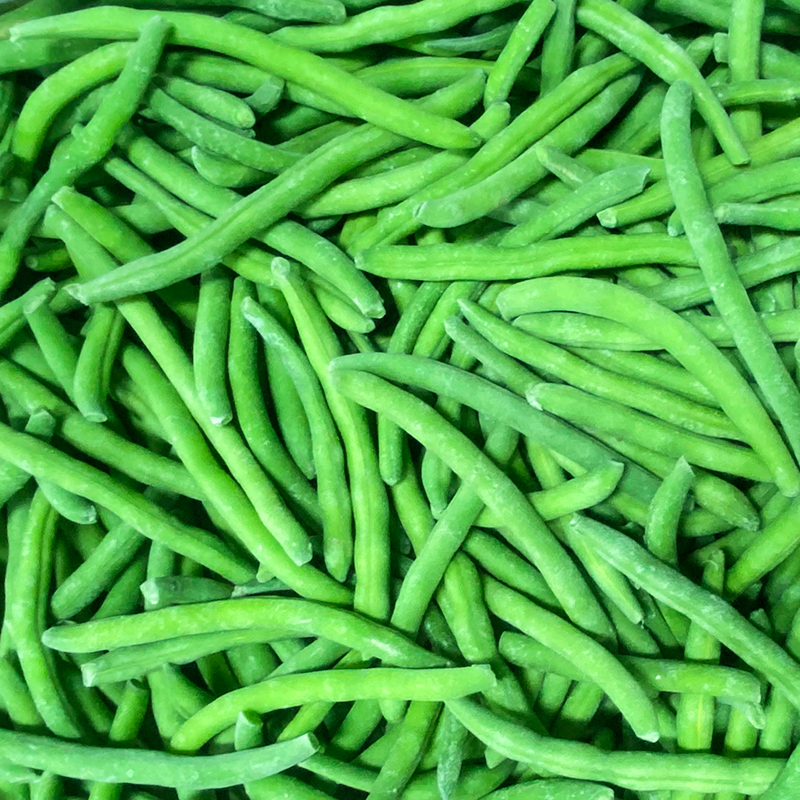
IQF Green Beans Cut are precisely sized pieces of green beans (Phaseolus vulgaris) that have undergone the Individually Quick Freezing process. Unlike traditional block freezing, IQF technology rapidly freezes each individual bean piece separately, preventing them from adhering into a solid mass.
Key Characteristics:
Cut Specifications: Beans are typically cut into uniform lengths, commonly 1-2 cm (approx. 1/2 to 3/4 inch), known as "cuts" or "french cut." This standardization ensures even cooking.
IQF Process: The core principle involves exposing individual bean pieces to extremely cold air (-30°C to -40°C / -22°F to -40°F) in a fluidized bed freezer or cryogenic tunnel. This rapid freezing causes the water within the bean cells to form numerous tiny ice crystals.
Result: The final product consists of loose-flowing, individual frozen bean pieces that maintain their distinct shape, color, and texture integrity upon thawing. This allows for easy portioning and reduces waste.
2. Are IQF Green Beans Cut as Nutritious as Fresh Alternatives?
The nutritional equivalence of IQF vegetables compared to fresh is a subject of scientific investigation. Current evidence indicates that IQF Green Beans Cut can retain a significant proportion of their nutritional value, often comparable to, and sometimes exceeding, "fresh" beans that have undergone extended transport and storage.
Preservation Mechanism: The rapid freezing process significantly slows down enzymatic and microbial activity, the primary causes of nutrient degradation and spoilage in fresh produce.
Nutrient Retention Factors:
Blanching: A critical pre-freezing step. Beans are briefly immersed in hot water or steam (typically 75-95°C / 167-203°F for 1-3 minutes) immediately after harvesting and cutting. This step:
Inactivates enzymes (like peroxidase and catalase) responsible for color loss (chlorophyll degradation), flavor deterioration, and texture breakdown during frozen storage.
Reduces surface microbial load.
Impact on Nutrients: While essential for quality preservation, blanching causes some leaching of water-soluble vitamins (e.g., Vitamin C, some B vitamins) and minerals. The speed and precision of modern blanching minimize these losses.
Freezing Speed: IQF's rapid freezing forms small ice crystals. This minimizes physical damage to the plant cell walls, helping to retain cellular integrity and reduce drip loss (and associated nutrients) upon thawing.
Comparison to "Fresh": "Fresh" green beans available in stores may have been harvested days or weeks prior. During transport and storage at ambient or chilled temperatures, nutrient degradation (especially heat-sensitive vitamins like Vitamin C and folate) occurs continuously. IQF beans, processed and frozen within hours of harvest at peak ripeness, effectively lock in nutrients at that point.
Scientific Consensus: Studies, including those referenced by bodies like the International Frozen Food Institute (IFFI) and academic research (e.g., University of California-Davis), consistently show that properly processed frozen fruits and vegetables, including IQF green beans, retain vitamins, minerals, and antioxidants at levels comparable to, and often superior to, their fresh counterparts after typical storage periods for the fresh product. Protein, fat, carbohydrate, and fiber content remain virtually unchanged.
3. How Does the IQF Processing Technology Impact IQF Green Beans Cut?
The IQF process is a sophisticated sequence of steps designed for optimal preservation, each impacting the final quality of the Green Beans Cut. Companies like Yuyao Gumancang Food Co., Ltd. utilize advanced, large-scale IQF lines to achieve this efficiently.
Critical Processing Stages & Impacts:
Harvesting & Initial Sorting: Beans are harvested at optimal maturity. Rapid transport to processing facilities minimizes quality loss. Initial sorting removes debris and defective beans. Impact: Ensures raw material quality.
Washing: Thorough washing removes soil, pesticides, and surface contaminants. Impact: Essential for food safety and sensory quality.
Cutting: Beans are mechanically cut to precise specifications using high-speed cutters. Impact: Determines piece size uniformity crucial for even freezing and cooking. Consistent cuts minimize fines (small fragments).
Blanching (Critical Control Point): As detailed in Section 2. Impact: Preserves color, flavor, texture; inactivates enzymes; reduces microbes; causes minor, controlled nutrient leaching.
Cooling: Blanched beans are rapidly cooled, usually with chilled water sprays or air, to halt the cooking process. Impact: Prevents overcooking, preserves texture, prepares beans for efficient freezing.
De-watering / Drying (Surface Moisture Removal): Centrifugal dryers or air knives remove excess surface water. Impact: Crucial step for IQF efficiency. Excess water causes clumping during freezing. Removal ensures individual quick freezing.
IQF Freezing (Core Technology): Beans enter an IQF tunnel. Fluidized bed freezers use powerful upward cold air to suspend the beans, maximizing surface exposure and ensuring each piece freezes individually within minutes. Cryogenic freezers (using liquid nitrogen or CO2) achieve even faster freezing. Impact: Formation of small ice crystals minimizes cell wall damage, preserving texture and minimizing drip loss. Prevents clumping, ensuring free-flow product. Locks in nutrients and sensory attributes at peak.
Metal Detection & Final Sorting: Beans pass through metal detectors. Optical sorters may remove remaining color defects or foreign material. Impact: Ensures food safety and final product quality consistency.
Weighing & Packaging: Beans are weighed and packaged in moisture-proof, vapor-barrier bags (e.g., polyethylene) or cartons, often under nitrogen gas flushing to minimize oxidation. Impact: Protects against freezer burn, dehydration, and oxygen degradation during storage. Maintains quality during distribution.
Cold Storage: Packaged beans are stored at -18°C (0°F) or below in facilities like those operated by Yuyao Gumancang Food Co., Ltd., which highlights its substantial daily storage capacity of 10,000 tons. Impact: Maintains the frozen state, ensuring long-term stability (typically 18-24 months from processing date).
Scale & Efficiency: The reference to Yuyao Gumancang Food Co., Ltd. possessing three IQF full-automatic flow production lines (two dedicated to vegetables) with an annual vegetable processing capacity of 8,000 tons underscores the industrial scale and efficiency achievable with modern IQF technology. Automation ensures consistency, hygiene, and throughput.
4. What are the Advantages and Disadvantages of IQF Green Beans Cut Compared to Fresh?
A balanced assessment reveals distinct pros and cons:
Advantages of IQF Green Beans Cut:
Extended Shelf Life: IQF beans can be stored for 18-24 months at -18°C without significant quality loss, drastically reducing spoilage compared to fresh beans (typically 7-10 days refrigerated).
Year-Round Availability & Consistency: Provides access to green beans regardless of season or regional harvest variations. Offers consistent size, color, and quality batch-to-batch.
Convenience: Pre-washed, pre-cut, ready-to-use. Saves significant preparation time. Allows for easy portioning from frozen.
Nutrient Retention: As discussed, retains vitamins and minerals effectively, often matching or surpassing fresh beans after typical storage/transit times for the latter. Processed at peak ripeness.
Reduced Waste: Long shelf life and portion control minimize spoilage and unused portions common with fresh beans.
Logistical Efficiency: Lower weight (water removed during blanching/cooling) and non-perishable nature during transport reduces logistics costs and environmental footprint compared to expedited fresh shipping.
Disadvantages of IQF Green Beans Cut:
Texture Variation: While IQF minimizes damage, freezing inherently alters cellular structure. Thawed or cooked-from-frozen IQF beans may have a slightly softer texture than perfectly fresh, just-harvested beans. Proper cooking techniques mitigate this.
Energy Intensive Process: The IQF freezing and subsequent cold chain require significant energy input.
Dependency on Cold Chain: Product integrity is entirely reliant on maintaining temperatures ≤ -18°C throughout storage, transport, and retail display. Temperature fluctuations ("temperature abuse") can accelerate quality degradation and ice crystal growth.
Initial Cost: The investment in harvesting, processing (blanching, IQF freezing lines), packaging, and cold storage infrastructure is substantial, reflected in the product price.
Blanching Losses: Some water-soluble nutrients are unavoidably lost during the essential blanching step, though minimized by modern techniques.
5. How to Identify High-Quality IQF Green Beans Cut?
Assessing quality involves evaluating both the frozen product and its performance upon preparation:
Visual Inspection (Frozen State):
Color: Should be a bright, uniform green, characteristic of the bean variety. Dull, faded, yellowish, or brownish hues indicate age, poor blanching, or temperature abuse. Avoid packages with excessive frost or ice crystals inside (signs of thawing and refreezing or poor packaging).
Clumping: The beans should be completely loose-flowing. Significant clumping suggests inadequate de-watering before freezing or temperature abuse causing partial thawing and refreezing. Minor clusters of 2-3 beans might occur but should break apart easily.
Uniformity: Pieces should be consistent in size and shape (e.g., all ~1.5cm cuts). Excessive fines (small fragments) or irregular pieces indicate poor cutting or handling.
Foreign Material: The product should be free from stems, leaves, stones, or other extraneous matter. Packaging should be intact with no tears.
Label Information:
Ingredients: Should state only "Green Beans." Avoid products with added salt, preservatives, or coatings unless specified for a particular application.
Best Before/Use By Date: Check for a clear date within the typical 18-24 month shelf life.
Origin & Processor: Reputable processors like Yuyao Gumancang Food Co., Ltd., which emphasizes adherence to business philosophies like "health first, customer first" and possesses recognized production bases (e.g., recorded by national customs), often indicate higher standards of quality control and food safety compliance (e.g., HACCP, GFSI standards like BRC or IFS).
Performance Upon Thawing/Cooking:
Minimal Drip Loss: High-quality IQF beans release minimal water upon thawing, indicating good cell structure preservation.
Color Retention: Should maintain a vibrant green color after cooking. Excessive fading indicates poor processing or age.
Texture: Should be tender-crisp (al dente) when properly cooked, not mushy or excessively tough. Residual firmness is a sign of good quality.
Flavor: Should exhibit a clean, fresh green bean flavor. Off-flavors (sour, fermented, stale) are signs of spoilage or poor processing.
Reputation & Certification: Purchasing from suppliers known for quality frozen vegetables and products bearing recognized food safety certifications provides additional assurance of quality control throughout the process.



 English
 中文简体
中文简体 日本語
日本語