1. What are IQF rape flowers? Essential differences from fresh rape flowers
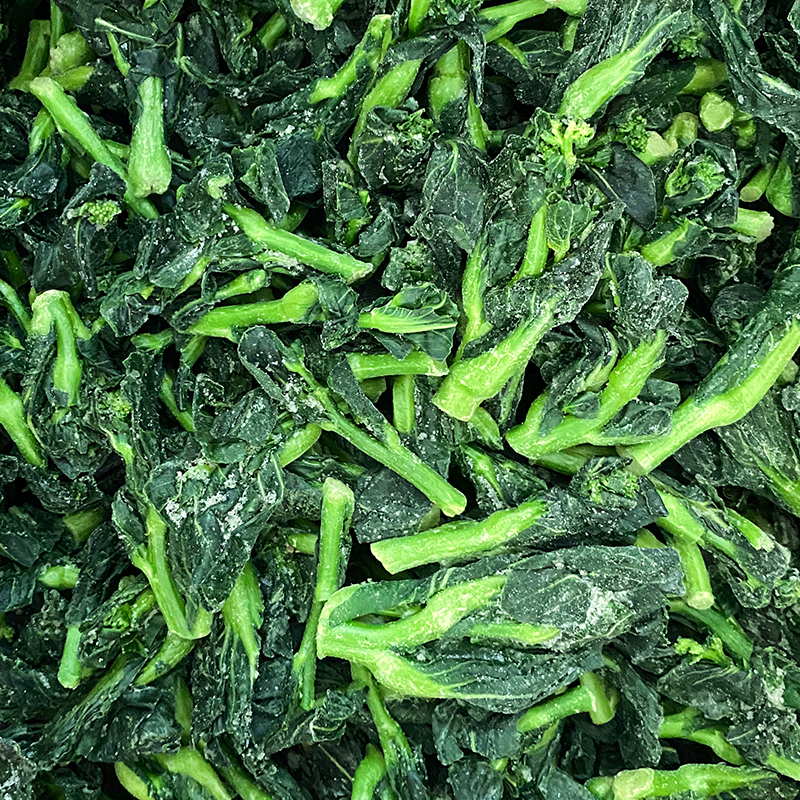
IQF rape flowers (Individually Quick Frozen rape Flowers) refer to rape flowers processed using the Individual Quick Freezing (IQF) process. The raw materials undergo rigorous screening, cleaning, possible sorting (by flower size or degree of openness), blanching (a key process), and rapid freezing. Its core characteristic is that the flowers remain separate and unattached during the freezing process.
Essential differences from fresh rape flowers:
Shelf life and shelf life: Fresh rape flowers are a fresh agricultural product and are prone to wilting, browning, and spoilage. Their shelf life at room temperature is typically only a few hours to one to two days, and refrigeration can only extend this period to a limited extent. IQF rape flowers are rapidly cooled (-30°C to -40°C) to a core temperature below -18°C, causing the moisture inside the flowers to form tiny ice crystals. This effectively inhibits microbial growth and enzymatic reactions, enabling long-term stable storage (typically 12-24 months).
Convenience and Pre-processing: Fresh rape flowers require immediate processing, including cleaning and sorting. IQF rape flowers are cleaned, blanched, and frozen before shipment, making them ready-to-cook/ready-to-use, allowing them to be taken on demand, significantly reducing pre-processing time and raw material loss.
Supply Stability: IQF technology overcomes the short seasonal flowering period and geographical limitations of rape flowers, ensuring a continuous year-round supply during the off-season, ensuring food processing and consumption needs.
2. Key Applications of IQF rape Flowers
Food Processing Industry:
Frozen Mixed Vegetable Packs: Used as a color and flavor enhancer for prepared dishes, frozen soups, and mixed vegetable meal packs. Seasoned Vegetable Products: Used to create ready-to-eat vegetable side dishes or ingredients with specific flavors (similar to the application areas related to the seasoned vegetable production line owned by Yuyao Gumancang Food Co., Ltd. mentioned in the reference).
Quick-Frozen Convenience Food Ingredients: Added to frozen fried rice, fried noodles, and risotto to enhance color and nutritional value.
Specialty Food Ingredients: Serves as a potential source of natural yellow pigments or specific flavor components.
Food Service Industry (HoReCa): Widely used in restaurants, hotels, and canteens to garnish quick-cooked dishes, enhance soups (such as preserved pork with preserved vegetables), stir-fries (such as vegetable rice), and cold dishes, enhancing the aesthetics of dishes and serving efficiency.
Retail: Sold directly as bagged or boxed frozen vegetables to meet the needs of convenient home cooking, used in homemade soups, stir-fries, or as garnishes.
Export: IQF processing significantly extends the shelf life, enabling long-distance transportation and international sales of these regionally and seasonally distinctive agricultural products. 3. How IQF Technology Preserves the Morphology and Color of rape Flowers
The Core Function of Rapid Freezing: IQF technology utilizes intensely cold air (fluidized freezing) or ultra-low-temperature media (such as liquid nitrogen) to rapidly force rape flowers through the zone of maximum ice crystal formation (0°C to -5°C) within a very short period of time (usually a few minutes).
Forming Tiny Ice Crystals: Rapid freezing causes the water inside and outside the cells to simultaneously form a large number of tiny ice crystals. These tiny ice crystals cause minimal mechanical damage to the plant's cell walls and tissue structure, effectively maintaining the integrity of the flower's morphology and preventing larger ice crystals from puncturing cells and causing post-thaw softening and deformation.
The Indispensability of Blanching: For rape flowers, blanching is the most critical step in IQF processing to maintain a bright yellow color and consistent quality.
Complete Enzyme Inactivation: Brief hot water or steam treatment effectively inactivates or destroys enzymes that cause browning (such as polyphenol oxidase) and chlorophyll degradation (such as chlorophyllase and peroxidase), which is the core mechanism for locking in the vibrant yellow color. Color Fixation and Shape Preservation: Moderate heat treatment helps soften some cell wall material, providing support during subsequent freezing and helping stabilize natural pigments.
Reducing Microbial Load and Removing Surface Impurities: Reducing initial bacterial counts improves safety. Precise control of blanching temperature and time is crucial, striking a balance between inactivating enzymes and minimizing heat damage (to texture and flavor).
Continuous Low Temperature Inhibition of Deterioration: Subsequent, stable frozen storage at -18°C or lower effectively inhibits enzyme activity and microbial activity, ensuring long-term color and quality stability.
4. How to Assess the Quality of IQF rape Flowers
Color: A bright, uniform yellow (varies slightly depending on variety and maturity). Avoid extensive or significant browning, fading, darkening, or greening (inadequate blanching resulting in inadequate chlorophyll degradation).
Form & Integrity: The flowers should be plump and relatively intact, with clearly visible petals and no visible damage, bruising, excessive wilting, or debris. High individual separation, loose and free of lumps or ice.
Ice Crystals: Surface ice crystals should be thin and uniform. Avoid large ice clumps, thick frost, or excessively thick ice coats (indicating possible temperature fluctuations that may have caused water migration and recrystallization).
Foreign Matter: No visible foreign matter (such as leaves, stem fragments, sand, gravel, insect remains, metal, etc.).
Odor: After thawing, the rape should have the unique, fresh aroma of rape flowers. No foreign odors (such as rancid, stale, fermented, or chemical solvent odors).
Size & Uniformity: Flower size should meet the nominal specifications (if graded) and be relatively uniform within the batch. Certification & Compliance: Suppliers must possess valid food safety management system certification (such as HACCP, ISO 22000, BRC, IFS, etc.), and their products must comply with regulatory requirements (such as pesticide residues, heavy metals, and microbial safety) in their target markets. For example, a factory with large-scale production capabilities and export qualifications, such as Yuyao Gumancang Food Co., Ltd. (mentioned in the reference) (which boasts multiple fully automated IQF production lines, 10,000-ton daily storage capacity, and a customs-registered base), is a testament to its quality management system and compliance.
5. Usage and Thawing Requirements for IQF rape Flowers
Core Principle: Direct Cooking Recommended.
Recommended Method:
Direct Cooking: This is the most common method and the one that best preserves quality. Frozen IQF rape flowers are directly heated in boiling water (blanching), hot soup, hot oil (stir-frying), or steam. Rapid heating minimizes loss of juice, preserving their shape and desired texture (usually requiring a certain degree of tenderness). Microwave Heating: Use a microwave-safe container and adjust the power and time according to the package instructions or actual needs to heat to the desired temperature.
Reasons why conventional thawing is not recommended:
Loss of Texture: Slow thawing (especially at room temperature) causes ice crystals to melt, preventing cells from effectively reabsorbing water, resulting in loss of sap, wilting, and loss of plumpness.
Risk of Color Deterioration: The thawing process may allow for residual enzyme activity or oxidation reactions, leading to darkening of the flower color.
Microbiological Risks: Prolonged exposure to the 4°C-60°C temperature danger zone increases the risk of microbial growth.
Efficiency Considerations: Direct cooking is more time-saving and convenient.
Special Applications (Cold Dishes): If cold dishes or salads are necessary, use a rapid, controlled refrigerated thaw (0-4°C) under strict hygienic conditions. Use immediately after thawing to avoid prolonged exposure to room temperature. 6. Considerations for Procuring IQF rape Flowers
Supplier Evaluation:
Strictly review supplier qualifications: business license, production license, and relevant food safety management system certifications (HACCP, ISO 22000, etc.).
Investigate production and quality control capabilities: Understand the raw material sources, processing techniques (especially the control of the blanching process), quality control laboratory configuration, production scale, and cold chain management. For example, Yuyao Gumancang Food Co., Ltd. boasts multiple fully automated IQF vegetable production lines, 10,000-ton daily storage capacity, and a customs-registered base, providing important objective evidence for assessing supply stability and quality control capabilities.
Confirm export qualifications: For export, suppliers must possess valid export food production enterprise registration certificates and comply with the registration requirements of the target importing country (if applicable).
Product Specification Confirmation: Clearly agree on specific product specifications: flower size/opening level (e.g., bud, half-open, fully open), blanching, packaging method (box weight, inner bag material/specifications), and implementation standards (national, industry, company, or customized). Defined Quality Requirements: Detailed acceptance criteria should be specified in the purchase contract or order, including sensory indicators (color, form, odor, impurities), physical and chemical indicators (net weight, moisture), microbiological indicators, and safety indicators (limits for pesticide residues, heavy metals, etc.). Suppliers should be required to provide a factory inspection report or Certificate of Analysis (COA) for each batch.
Packaging & Labeling Inspection: Ensure that packaging materials are sturdy, well-sealed, and suitable for refrigerated storage and transportation. Label information must be clear, accurate, and complete: product name, specifications, ingredients (e.g., only rape flowers), net weight, production date, shelf life, storage conditions (below -18°C), producer name and address, production license number (SC), required nutritional information table (if required), and batch number.
Cold Chain Verification: Confirm that the supplier has reliable refrigerated transportation capabilities (e.g., refrigerated trucks equipped with temperature recorders). Upon receipt, you must immediately check: the product's core temperature is ≤ -18°C (using a needle thermometer); and the packaging is intact, free of deformation, and shows no obvious signs of thawing (such as frost, lumps, or dripping water).
Confirm that you or your storage partner has a qualified freezer (≤ -18°C with minimal temperature fluctuations).



 English
 中文简体
中文简体 日本語
日本語