1. What is IQF Loose Cauliflower?
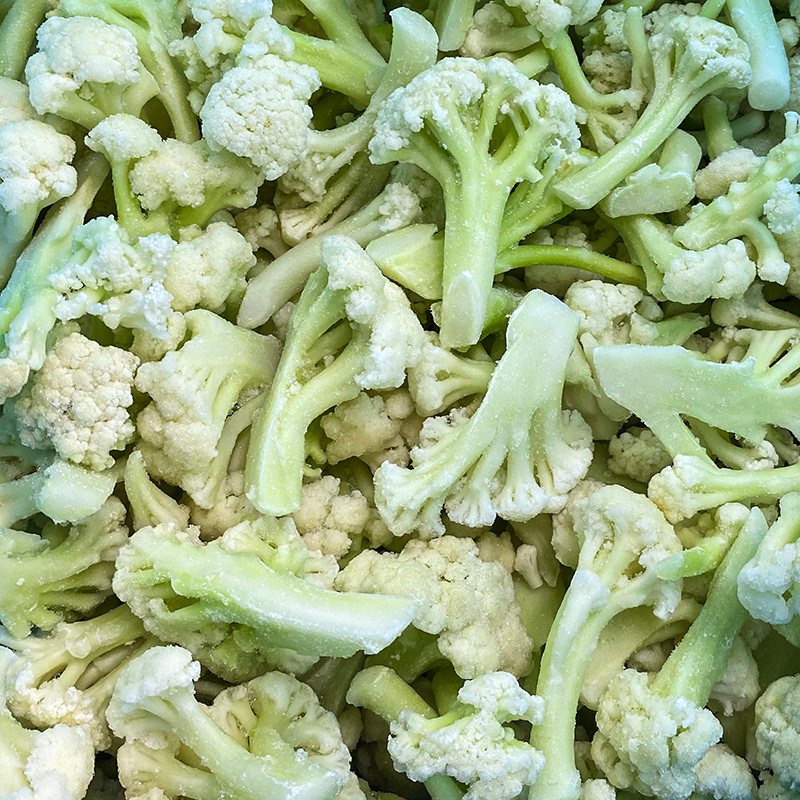
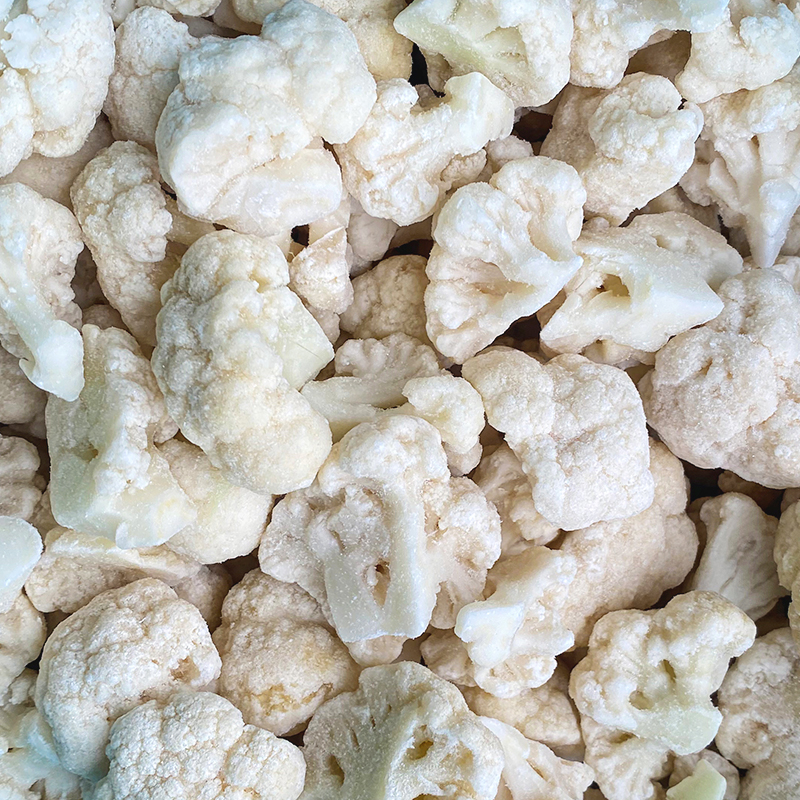
IQF Loose Cauliflower (Individually Quick Frozen Loose Cauliflower) is a product that has been rigorously sorted, cleaned, and cut into the required size (small buds) and then rapidly frozen using Individual Quick Freezing technology. Its core features are:
IQF technology: Within a very short period of time (usually within a few minutes), individually laid out cauliflower buds are exposed to ultra-low temperatures (usually ≤ -35°C), rapidly reducing their core temperature to below -18°C.
Individual Freezing: This process ensures that each small bud is frozen independently, preventing them from clinging to each other, resulting in a loose, "bulk" appearance.
Low-temperature Storage: After freezing, the product is stored and transported at a constant low temperature of ≤ -18°C to maximize quality. 2. IQF Loose Cauliflower Core Advantages
Maximizes Freshness: Rapid freezing effectively inhibits enzyme activity and microbial growth, locks in cellular moisture to the greatest extent possible, and minimizes ice crystal damage to the cell structure. This effectively preserves the cauliflower's original color (clean white or creamy white), natural flavor, texture (crispness), and key nutrients (such as vitamin C, dietary fiber, and vitamin K).
Easy and Efficient: The loose, "bulk" format allows users to precisely take the amount they need without thawing the entire piece, eliminating waste and significantly improving efficiency in the kitchen or processing stages.
Year-Round Stable Supply: This eliminates seasonal constraints and provides food processors, caterers, and retailers with a stable and reliable year-round supply of cauliflower, ensuring menu or product line consistency.
Extended Shelf Life: Maintaining a constant low temperature of ≤ -18°C significantly extends the shelf life of IQF cauliflower, typically up to 18-24 months, reducing the risk of loss and inventory pressure.
Microbiological Safety: Low-temperature freezing and the subsequent cold chain effectively inhibit the growth of pathogens and spoilage bacteria. Manufacturers such as **Yuyao Gumancang Food Co., Ltd.** adhere to strict hygiene standards and processing protocols (such as HACCP) and include metal detection in their production processes to further ensure food safety.
3. How to determine the quality of IQF loose cauliflower?
Color: High-quality IQF cauliflower buds should be a uniform, pure white or creamy white, without obvious browning, yellowing, or grayish areas. Bright color is a key indicator of freshness.
Appearance and Integrity: The buds should be neatly cut and relatively uniform in size (within the specification range), without excessive breakage or mechanical damage. They should be well frozen, with the product being loose and free of lumps.
Texture (after thawing): After thawing, the cauliflower should retain a certain crispness and firmness and should not appear soft, spongy, or severely dehydrated.
Flavor and Odor (after thawing): The cauliflower should have the characteristic light, slightly sweet flavor of fresh cauliflower, free of any foreign odors (such as fermented, oily, or chemical). Ice Content/Glaze: A thin, even, transparent glaze covers the surface of the product to prevent dehydration (freezer burn) during storage and transportation. Excessively thick glaze or clumping may indicate problems with the freezing process or cold chain.
Impurities: The product should be clean and free of visible foreign matter (such as stem and leaf residues, foreign matter, and insect fragments).
Microbiological Indicators: Must comply with national and target market food safety regulations, such as total bacterial count, coliform bacteria, and pathogenic bacteria (Salmonella).
Chemical Residues: Comply with relevant pesticide residue and heavy metal residue limits. For regulated companies like Yuyao Gumancang Food Co., Ltd., raw material base control and testing capabilities are key to quality assurance.
Cold Chain Stability: Maintaining a stable temperature of ≤ -18°C from production to consumer is the cornerstone of quality assurance. Temperature fluctuations accelerate quality deterioration.
4. What are the common specifications and sizes of IQF Loose Cauliflower?
Cauliflower florets are typically categorized by their size (measured in millimeters):
Small Florets: Common sizes include 10-20mm and 15-25mm. Suitable for soups, mixed vegetables, baby food, and delicate salad garnishes.
Medium Florets: Common sizes include 20-35mm and 25-40mm. These are the most versatile and are often used in stir-fries, stews, instant meal kits, pre-made dishes (such as curries), pizza toppings, and salads.
Large Florets: Common sizes include 35mm+ and 40mm+. Suitable for dishes where a distinct shape must be maintained, such as roasted cauliflower, air-fried dishes, and served whole as a side dish.
Mixed Florets: Includes florets of various sizes.
Stem Pieces/Cauliflower Rice: Thick cauliflower stems or buds are further chopped into rice-like pieces (usually <5mm) for use as a low-carb rice substitute called "cauliflower rice."
5. What are the common applications for IQF Loose Cauliflower?
Food Service: Restaurants, hotels, cafeterias, and group catering (quick-cook stir-fries, stews, soups, salads, side dishes, and buffet filling).
Food Processing:
Prepared meals and ready-to-eat meal kits (frozen mixed vegetables, curries, stews, fried rice, and side dishes).
Canned soups and sauces/concentrates.
Frozen pizza toppings.
Mixed vegetable pieces (combinations of corn kernels, carrots, peas, green beans, etc.).
Infant and toddler foods.
Frozen salads (need to be thawed and eaten immediately).
Seasoned, ready-to-eat vegetable products (such as the Seasoned Vegetable product line owned by **Yuyao Gumancang Food Co., Ltd.**). Retail: Frozen vegetables sold in bulk or bagged form in supermarkets and stores for home consumption.
Export: Meeting international market demand.
6. Comparison of IQF Loose Cauliflower and Block Frozen Cauliflower
IQF Loose Cauliflower differs from block frozen cauliflower in several key aspects, primarily in the freezing process, product form, ease of use, and final quality:
Freezing Process and Product Form:
IQF Loose Cauliflower: Utilizing Individual Quick Freezing technology, the cauliflower buds are rapidly and individually frozen during the freezing process. This process ensures that each bud is frozen independently, resulting in a loose, loose, and free-standing product.
Block Frozen Cauliflower: The cauliflower buds are collectively packed into a container (such as a brick-shaped mold) and then slowly frozen as a whole, ultimately forming a hard, ice-like product. The buds are tightly bound together within the ice block. Ease of Use:
IQF Loose Cauliflower: Its loose form is one of its core advantages. Users can precisely and conveniently remove any number of florets as needed, without thawing the entire block. This significantly improves efficiency in the kitchen or processing stages and reduces waste.
Block Frozen Cauliflower: The entire block must be completely thawed before use to separate the clinging florets. This prevents on-demand decantation, reduces flexibility, and takes a long time to thaw, which can lead to over-thawing and loss of juice.
Thawing Requirements:
IQF Loose Cauliflower: In most applications (such as stir-fries, soups, and baking), it can be used directly from frozen without prior thawing. Even if thawing is necessary, the individual florets thaw relatively quickly.
Block Frozen Cauliflower: It must be thawed entirely before use. Thawing typically requires a longer time (such as overnight refrigeration or soaking in cold water), and the florets may become soft and limp after thawing due to squeezing and the loss of juice. Product Integrity and Quality Preservation:
IQF Loose Cauliflower: The rapid freezing process of IQF minimizes ice crystal damage to the cell structure, effectively preserving the cauliflower's original color, texture (crispness), and flavor. Individual freezing also reduces the risk of mechanical damage during processing and transportation, ensuring the cauliflower maintains its original shape after thawing or cooking.
Block-Frozen Cauliflower: The slower freezing process results in larger ice crystals that damage the cell structure, potentially leading to a soft texture, significant loss of juice, dull color, and flavor after thawing. The forced separation of particles during thawing can also cause the cauliflower to break up.
Cold Chain Efficiency:
IQF Loose Cauliflower: The loose shape results in a lower bulk density, which occupies a relatively large space during storage and transportation (there are gaps between particles).
Block-Frozen Cauliflower: Frozen into compact blocks with a high bulk density, it can store more product per unit volume, resulting in relatively high storage and transportation efficiency. Key application differences:
IQF Loose Cauliflower: Due to its exceptional convenience, quality preservation, and form integrity, it is the preferred choice for the food service industry (for quick service), the food processing industry (for prepared meals, pizza toppings, mixed vegetable packs), and other applications where appearance and taste are paramount.
Block Frozen Cauliflower: More suitable for applications where final product form is less critical, whole-piece thawing is acceptable, and high-volume use is required, such as in the large-scale industrial production of certain soups or sauces, or as an ingredient in cost-sensitive applications.



 English
 中文简体
中文简体 日本語
日本語