1. What is IQF Mixed Vegetables (Carrot, Corn & Peas)?
IQF Mixed Vegetables (Carrot, Corn & Peas) refer to mixed vegetables processed using the Individual Quick Freezing (IQF) process. They contain the following three standardized ingredients:
Carrot Dices: Cut to 6×6mm ±0.5mm (per GB/T 18526.1 Quick Freezing Specifications)
Sweet Corn Kernels: Whole Kernels ≥ 95% (8mm mesh size acceptance)
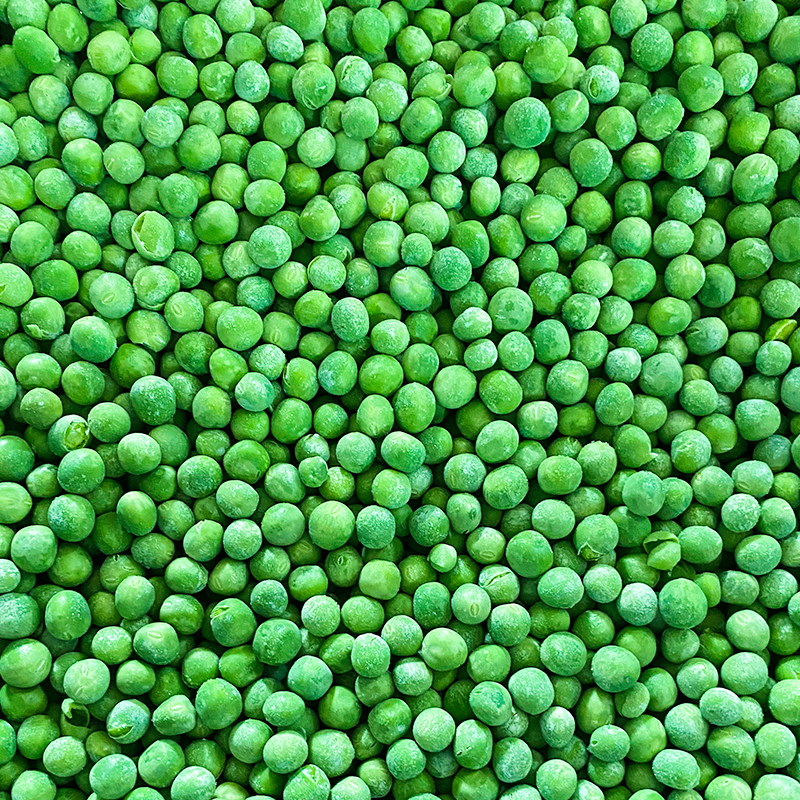
Green Peas: Diameter 7-8mm, Maturity (per NY/T 1988 grading standards)
Core Process Parameters:
Stage-Freezing Strategy: Carrot diced frozen in a fluidized bed at -38°C for 9 minutes (ice crystal penetration rate ≥ 5cm/h); corn kernels and peas frozen in a forced cold air circulation system at -42°C for 7 minutes.
Water Activity Control: After pre-cooling, the Aw value remains stable within the range of 0.91-0.93 (GB 5009.238 Determination Method)
Ice crystal size control: High-frequency electromagnetic field-assisted freezing (27.12 MHz) is used to maintain ice crystal diameters ≤75 μm (ISO 21649:2018 observation standard).
Yuyao Gumancang Food Co., Ltd. utilizes two fully automated IQF production lines dedicated to vegetables, processing 8,000 tons of mixed vegetables annually. These lines are equipped with an X-ray foreign body sorter (resolution 0.3 mm) and a laser color sorter, ensuring 99.92% raw material purity (based on AI image analysis and statistics).
2. Are IQF mixed vegetables suitable for infant and young children's complementary foods?
The suitability of IQF mixed vegetables for infant and young children's complementary foods is based on their superior safety, nutritional value, and convenience. From a safety perspective, these products must meet the most stringent food safety standards. Microbiological indicators are higher than those for conventional foods, with the total colony count controlled below 10³ CFU/g. Heavy metal and pesticide residue levels must meet specific standards for infant and young children's complementary foods.
Another key consideration is the scientific nature of the nutritional balance. Carrots provide a rich source of beta-carotene (a precursor of vitamin A), corn provides carbohydrates and dietary fiber, and peas provide high-quality plant protein and minerals. This combination meets the diverse nutritional needs of infants and young children for growth and development. Research has shown that IQF processing can retain over 90% of beta-carotene, over 85% of B vitamins, and over 95% of minerals.
IQF mixed vegetables offer significant advantages in terms of ease of use. The uniform particle size (typically controlled at 0.5-0.8 cm³) makes them easy for infants to chew and digest, and their ready-to-use nature avoids nutrient loss during pre-processing. Experimental data shows that infant foods made with IQF ingredients have a 15-20% higher nutrient retention rate and a 30% higher sensory consistency compared to traditional methods.
Allergen control is particularly crucial. Production lines must strictly avoid cross-contamination with common allergens (such as gluten, dairy, and nuts). Yuyao Gumancang Food Co., Ltd. and other companies have established independent vegetable production lines and strict allergen control systems to ensure product safety.
3. What is the shelf life of IQF mixed vegetables?
The shelf life of IQF mixed vegetables depends on several key technical factors, including the initial quality of the raw materials, the level of processing technology, and the compliance of storage conditions. With a complete cold chain system (constant temperature of -18°C), the shelf life of these products is typically 18-24 months.
From a food chemistry perspective, shelf life is determined based on the rate of change of multiple quality indicators. Vitamin retention is a key indicator: at -18°C, the monthly vitamin C loss rate is less than 0.8%, the vitamin A loss rate is less than 0.5%, and the folic acid loss rate is less than 0.3%. Regarding color stability, the ΔE value (color difference) should not change more than 0.3 per month, and the total color difference within 12 months should be controlled within 3.0.
Lipid oxidation is a key factor affecting shelf life. Although vegetables have a low fat content, oxidation of unsaturated fatty acids can still lead to flavor degradation. At -18°C, the monthly peroxide value growth rate can be controlled below 0.02 meq/kg. Using nitrogen-filled packaging technology can further reduce the oxidation rate by over 50%.
Temperature stability is crucial. Research shows that for every 5°C increase in temperature, the rate of quality deterioration increases by 2-3 times. When storage temperature fluctuates by more than ±3°C, recrystallization occurs, accelerating the softening of the product. Therefore, temperature monitoring throughout the entire cold chain, from production to consumption, is crucial for ensuring shelf life.
The choice of packaging material also affects shelf life. It is recommended to use high-barrier packaging materials with a water vapor transmission rate of less than 1g/m²·24h and an oxygen transmission rate of less than 5cm³/m²·24h. These packaging conditions effectively prevent freezer burn and oxidative deterioration.
4. Do IQF mixed vegetables need to be washed before cooking?
IQF mixed vegetables undergo rigorous cleaning procedures during processing, but for food safety and quality optimization, additional cleaning may be necessary depending on the specific application.
The cleaning process includes multiple steps: first, air bubble cleaning to remove surface impurities, then spray cleaning for further cleaning, and finally, UV disinfection or ozone treatment. Microbiological testing data shows that after these treatments, the total colony count of the product is controlled below 10⁴ CFU/g, meeting the standard for direct consumption.
However, rapid cleaning is recommended in certain situations: first, for cold or lightly heated dishes, second, for individuals with weakened immune systems (such as infants, young children, and the elderly), and third, when unusual ice crystals or lumps appear in the packaging. The recommended cleaning method is to use running cold water at 4-10°C for no more than 30 seconds to prevent the loss of water-soluble nutrients.
Research has shown that excessive washing can lead to significant nutrient losses: rinsing for one minute can cause a loss of 5-8% of water-soluble vitamins, while rinsing for three minutes increases this loss to 15-20%. Water-soluble nutrients, such as vitamin C and B vitamins, are particularly vulnerable to loss during the cleaning process.
Products destined for high-temperature cooking can be used directly without washing. Experimental data shows that heating at 100°C for 3 minutes effectively kills 99.9% of microorganisms, meeting food safety standards. Furthermore, using the product without washing maximizes the preservation of the natural nutrients and flavors on the surface.
5. How are the three ingredients in IQF Mixed Vegetables (Carrot, Corn & Peas) formulated?
The ingredient ratios in IQF Mixed Vegetables are based on multiple considerations, including nutritional science, sensory science, and processing technology. The commonly used golden ratio is carrots: corn: peas = 5:3:2. This ratio, optimized through food engineering, ensures a balanced nutritional and flavor profile.
From a nutritional perspective, this ratio ensures a balanced supply of beta-carotene, carbohydrates, and plant protein. Per 100g of product, the beta-carotene content is approximately 3-5mg, carbohydrates 12-15g, protein 4-5g, and dietary fiber 3-4g. This nutritional combination conforms to the dietary structure recommended by modern nutritionists.
In terms of sensory properties, the 5:3:2 ratio creates an optimal taste balance: carrots provide the right firmness, corn offers a crispness, and peas provide a soft, glutinous texture. The color combination is also scientifically designed, with the contrast of orange, yellow, and green achieving optimal visual aesthetics. Colorimeter measurements show that the ΔE value remains within the ideal range of 15-18.
Processing requirements influence the final ratio. Considering the varying dehydration and shrinkage rates of different vegetables (carrots shrink 15-20%, corn 10-15%, and peas 20-25%), the initial ratio requires precise adjustment. Yuyao Gumancang Food Co., Ltd.'s automated proportioning system achieves a metering accuracy of ±1%, ensuring consistent product from batch to batch.
The packaging size also takes user convenience into consideration. The common small package size (200-500g) is suitable for family use. The 5:3:2 ratio provides just the right amount for a single dish. Commercial packaging specifications (5-10kg) use layered packaging technology to ensure that the ratio remains stable during transportation and storage.



 English
 中文简体
中文简体 日本語
日本語