1. What are IQF corn kernels/corn segments/corn juice?
The IQF corn product line consists of three main categories: corn kernels, corn segments, and corn juice, all produced using individual quick freezing technology. These products utilize advanced freezing technology to achieve rapid freezing at extremely low temperatures of -30°C to -40°C. Each unit is frozen independently, preserving its physical properties and nutritional content.
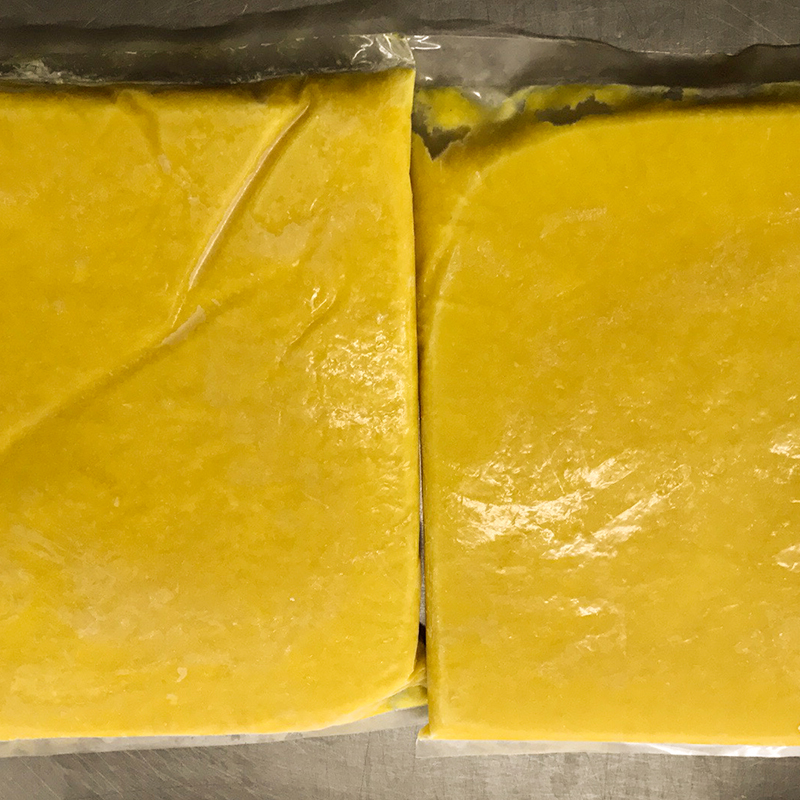
Corn kernels are made from carefully selected sweet corn after threshing, cleaning, and screening. Corn segments retain the cob shape and are suitable for foodservice applications where preservation of form is crucial. Corn juice is a liquid product extracted using modern extraction technology and then quickly frozen. For example, Yuyao Gumancang Food Co., Ltd.'s fully automated IQF production line utilizes fluidized freezing technology, suspending the product in a high-velocity cold air stream to ensure that each particle or droplet is evenly and quickly frozen.
From a food engineering perspective, the key to IQF technology lies in rapidly passing through the zone of maximum ice crystal formation (-1°C to -5°C). The freezing rate of corn products reaches 5-7°C per minute, keeping the ice crystals formed within the cells within a range of 50-100 microns in diameter. These tiny ice crystals do not damage the plant cell walls, thereby maximizing the integrity of the product's texture and flavor. Microbiological testing data shows that the total bacterial count of IQF-treated corn products is two orders of magnitude lower than that of conventional freezing, significantly improving product safety.
2. How do IQF corn kernels maintain distinct kernels and prevent clumping?
The technical principle behind IQF corn kernels maintaining distinct kernels is based on the synergistic effect of multiple engineering factors. First, precise pretreatment controls the moisture content, keeping the surface moisture within the optimal range (1.5-2.0%) to ensure freezing efficiency while preventing ice bridges between kernels.
The key technological innovation lies in the fluidized design of the freezing equipment. The use of vibrating fluidized bed freezing technology keeps the corn kernels in constant motion during the freezing process. According to fluid dynamics, when the cold air velocity reaches 4-6 m/s and the vibration frequency is maintained at 50-60 Hz, each kernel is evenly enveloped by the cold air while avoiding contact. Experimental data shows that under these conditions, the freezing time of the product is 60% shorter than with traditional methods, and the clumping rate is kept below 0.5%.
Surface treatment also plays a crucial role. A micro-atomized spray system using a food-grade anti-caking agent (such as monoglyceride) forms a nanoscale protective film on the surface of each kernel. This film not only prevents ice crystals from clumping but also effectively blocks oxygen, reducing the oxidation rate. Research has shown that treated IQF corn kernels maintain over 98% kernel separation after 12 months of storage at -18°C.
Precise control of the temperature profile is another crucial factor. The entire process from the initial temperature to the core temperature of -18°C is completed within 8-10 minutes, ensuring rapid passage through the critical zone for ice crystal formation. Thermodynamic analysis shows that the probability of clumping increases 3-5 times when the freezing time exceeds 15 minutes.
3. How does IQF corn juice prevent stratification and sedimentation after freezing?
The technical solution for preventing stratification and sedimentation in IQF corn juice is based on innovative approaches in colloid chemistry and cryoengineering. First, nano-homogenization technology is used to control the particle size of solid particles in the juice to within 50-100 nanometers, ensuring that Brownian motion is sufficient to overcome gravitational settling.
An advanced emulsification stabilization system is employed, along with natural stabilizers (such as inulin and gum arabic) to form a three-dimensional network structure. Rheological studies have shown that particle sedimentation can be effectively prevented when the viscosity coefficient is controlled between 150-200 mPa·s (measured at 25°C) and the yield value reaches 20-25 Pa. Zeta potential is also adjusted to maintain the particle surface charge between -30mV and -40mV, leveraging electrostatic repulsion to maintain system stability.
The freezing process parameters are specially optimized. Using spray freezing technology, the corn juice is atomized into 50-100 micron droplets through a pressure nozzle, freezing them instantly upon contact with cold air. This technology freezes each droplet into an independent unit, avoiding the component segregation that occurs when freezing large volumes. Experimental data shows that spray-frozen products are more than five times more stable than traditional block freezing.
Temperature management strategies are also crucial. A staged freezing process is employed: 80% of the water content is first frozen at -5°C to -10°C, followed by a rapid freeze of the remaining water content at -30°C. This process allows the stabilizer sufficient time to form a stable network structure, preventing ice crystal growth from disrupting the system equilibrium.
4. How is the natural sweetness locked in during IQF corn segment processing?
The key to locking in the natural sweetness of IQF corn segments lies in the coordinated control of sugar retention and flavor protection. First, through variety selection and controlled harvesting time, the raw corn is ensured to reach the optimal sugar content (16-18°Brix). Processing begins within two hours of harvest to minimize sugar conversion losses.
Precise blanching process parameters are employed: water temperature is controlled at 95±2°C, and the processing time is accurately measured to 45±5 seconds. This parameter, determined based on enzyme kinetic studies, is sufficient to inactivate polyphenol oxidase (PPO) and peroxidase (POD) while simultaneously maintaining the optimal starch gelatinization range (85-90%), preventing sugar loss due to over-gelatinization. Experimental results show that this process improves sugar retention by 15-20% compared to traditional methods.
Glass transition technology is used to preserve sugars during freezing. By adding natural preservatives (such as trehalose), the product's glass transition temperature (Tg) is adjusted, allowing the product to rapidly transition from a rubbery state to a glassy state during freezing. In the glassy state, molecular motion essentially ceases, effectively inhibiting sugar release and degradation. Differential scanning calorimetry (DSC) analysis shows that the optimized formulation increases the Tg from -23°C to -15°C, significantly improving product stability.
Packaging technology also contributes to maintaining sweetness. High-barrier packaging materials (water vapor transmission rate <1g/m²·24h, oxygen transmission rate <10cm³/m²·24h) combined with nitrogen-filled packaging technology keep residual oxygen levels below 1%. This packaging reduces the Maillard reaction rate to one-fifth of its original value during storage, effectively preserving its natural sweetness.
5. How should unused IQF corn kernels be handled after opening the bag?
Handling IQF corn kernels after opening requires a scientific approach based on the principles of food microbiology and freezing physics. First, adhere to best practices for "secondary freezing": immediately transfer any unused product to a tightly sealed freezer container, remove air, and then seal. Research indicates that suitable containers should have the following characteristics: a water vapor transmission rate <5g/m²·24h and a seal strength >40N/15mm.
Temperature management is crucial. The refreezing process should be completed within 30 minutes to prevent the product temperature from rising above -5°C. Experimental data shows that when product temperatures exceed -5°C, recrystallization accelerates, with each freeze-thaw cycle increasing the average size of ice crystals by 25-30%. It is recommended to use a rapid freezing function (if available) to quickly move the product through the -1°C to -5°C temperature danger zone.
Compartmental storage is another important measure. Opened packages should be stored in a dedicated area within the freezer, following a "first-in, first-out" principle. The packaging should be marked with the opening date. Microbiological studies have shown that opened products should be used within one month. While safety remains within control, quality indicators (particularly vitamin content and texture) will be significantly reduced after this period.
Avoiding repeated freeze-thaw cycles is crucial. Each freeze-thaw cycle can increase ice crystal size by 35-40%, increase cell juice loss by 15-20%, and increase vitamin C loss by 8-10%. It is recommended to portion the product according to usage, dividing large packages into smaller portions and taking only the required amount at a time.
For partially thawed products, the "single-use" principle should be adhered to: cook and use immediately after complete thawing and do not refreeze. Sensory evaluation data shows that while products that have been re-frozen still meet safety standards, their texture softens by 25%, their sweetness loss increases by 15%, and their flavor scores drop by over 30%.



 English
 中文简体
中文简体 日本語
日本語