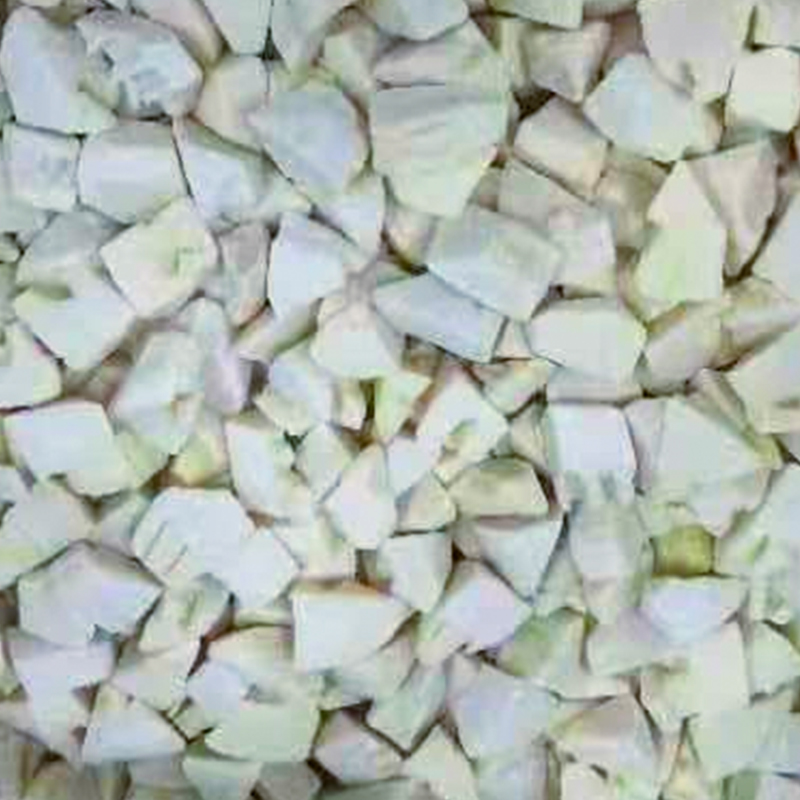
1. What are IQF Bamboo Shoots Cut?
IQF bamboo shoots cut are fresh bamboo shoots that have been cleaned, cut into specific sizes (such as slices, strips, or dices), and then processed using individual rapid freezing technology. Unlike traditional block freezing, IQF technology exposes each individual bamboo shoot to extremely low temperatures (-30°C to -40°C) for rapid freezing. This rapid freezing process instantly freezes the water within the bamboo shoot cells, forming tiny ice crystals.
The formation of these microscopic ice crystals is crucial. Slow freezing forms larger ice crystals, which expand and puncture the plant cell walls. This can lead to significant loss of juice during thawing, resulting in a soft texture, flavor, and nutritional value. In contrast, the tiny ice crystals formed during IQF processing cause minimal damage to the cell structure. As a result, IQF bamboo shoots retain their original crisp texture, natural color, fragrance, and nutritional value after thawing.
The production of high-quality IQF products requires significant technological investment. Yuyao Gumancang Food Co., Ltd., for example, operates three fully automated IQF production lines (one for aquatic products and two for vegetables), with an annual processing capacity of 8,000 tons of vegetables and 6,000 tons of seafood, and a daily storage capacity of 10,000 tons. This large-scale production technology ensures an efficient and hygienic process from raw material to finished product, minimizing external factors that could affect quality. The resulting product is a versatile ingredient that requires no additional preparation and can be used right out of the bag, saving time for both home kitchens and commercial catering operations while maintaining quality standards comparable to fresh bamboo shoots.
2. How to Choose the Freshest IQF Diced Bamboo Shoots?
Selecting high-quality IQF products is crucial to ensuring optimal cooking results. The evaluation process requires multi-sensory evaluation of the product, even in its frozen state.
Visual Inspection (Packaging and Product):
Packaging Integrity: The packaging should be airtight, durable, and free of tears, perforations, or excessive frost. Damaged packaging can lead to freezer burn—a condition in which air contacts the product, causing dehydration and oxidation, resulting in grayish-white, leathery patches on the surface.
Product Separability: This is a key indicator of genuine IQF processing. The individual bamboo shoot cubes within the bag should be loose and free-flowing. If the contents are frozen into a single, hard lump, this indicates the product has not been truly IQF processed or has been thawed and re-frozen during storage and transportation. Clumping significantly affects the texture and makes it difficult to separate and use.
Color: Choose products that retain their natural milky white to pale yellow color. Avoid products with dark brown spots or an overall dull, grayish color, as these may indicate stale ingredients or improper pre-freezing.
Label Analysis:
Ingredient List: The highest-quality IQF bamboo shoot cubes should contain only one ingredient: bamboo shoots. Avoid products with added preservatives, sugars, or sulfites, as the IQF process itself is the primary preservation method.
Ingredient Origin and Manufacturer: Well-known manufacturers specializing in vegetable processing, such as Yuyao Gumancang Food Co., Ltd., typically provide detailed information. Their large processing capacity and dedicated vegetable production lines are hallmarks of quality and scale.
Date Information: Check the production and/or best-before dates to ensure the product has the longest remaining shelf life.
Post-Purchase Evaluation (After Thawing):
After thawing, bamboo shoots should have a firm, crisp texture and exude the characteristic fresh aroma. Any rancidity or unusual odor is a clear sign of spoilage. Minimal sap loss (the amount of water released after thawing) is a sign of good IQF processing.
3. Are IQF diced bamboo shoots more economical than fresh bamboo shoots?
The economics of IQF versus fresh bamboo shoots cannot be evaluated solely based on a direct price per weight comparison; rather, the total cost of use and value preservation must be considered comprehensively.
Direct Price Comparison: At first glance, the price per bag of IQF diced bamboo shoots may be higher than the same weight of fresh, shelled bamboo shoots. However, this is not a true price-for-price comparison.
Yield and Waste: Fresh bamboo shoots require significant labor and time to prepare. Their tough, fibrous outer shell (sheath) must be removed, often requiring lengthy blanching to remove the natural bitterness and potential toxins before they can be eaten. This process can result in a weight loss of up to 50-60% simply from peeling and trimming. IQF diced bamboo shoots, on the other hand, are 100% edible—the price you pay represents the fully usable portion, with no pre-processing waste.
Seasonality and Availability: Fresh bamboo shoots are highly seasonal, typically only available in spring and early summer. During off-season, they are either unavailable or extremely expensive due to limited supply and the increased cost of transporting them from specific production areas. IQF products offer year-round stable supply and pricing, unaffected by seasonal fluctuations.
Convenience: Time savings are a significant economic factor. Pre-processing fresh bamboo shoots can take over an hour. IQF diced bamboo shoots can be prepared directly from frozen, significantly reducing meal preparation time—a crucial advantage for time-strapped families and the high-volume food service industry, where labor costs are a key factor.
Spoilage and Storage Losses: Fresh bamboo shoots are highly susceptible to spoilage, beginning to deteriorate and develop a bitter taste within a few days even under refrigeration. IQF products, when properly stored, can maintain a shelf life of over a year without losing quality, completely eliminating the financial losses caused by spoilage of unused fresh ingredients.
Therefore, when analyzing the total cost of ownership (including purchase price, waste, pre-processing labor, and spoilage losses), IQF diced bamboo shoots are generally a more economical, predictable, and convenient option in the long term.
4. How to properly store IQF diced bamboo shoots at home?
Proper storage is crucial to maintaining the high quality, safety, and extended shelf life provided by IQF technology. Improper storage can rapidly degrade product quality.
Maintaining a constant low temperature: The most important principle is to prevent temperature fluctuations. Store the product in the coldest area of the refrigerator, at -18°C (0°F) or below. Every time the product's temperature rises, even slightly, it causes tiny ice crystals to melt, only to refreeze into larger, more damaging crystals during the next freezing cycle. This process, called recrystallization, damages the cell walls, thereby diminishing the benefits of IQF technology.
Preventing freezer burn: Ensure the original packaging is tightly sealed after each use. If the original packaging is not resealable or has been damaged, transfer the contents to an airtight container or heavy-duty freezer bag. Expel as much air as possible from the bag before sealing to minimize oxidation and moisture loss.
Portioning: To avoid repeatedly exposing the entire bag to warm air, consider portioning the product when first opening. This way, only a single serving is needed, while the remaining portion remains perfectly frozen.
Avoiding cross-contamination: Store diced bamboo shoots separately from strong-smelling foods in the freezer, as these may absorb odors over time, affecting their naturally mild flavor.
Adhering to these procedures ensures that the product maintains its texture, flavor, and nutritional integrity from first use to last.
5. What is the shelf life of IQF diced bamboo shoots?
The shelf life of IQF diced bamboo shoots depends on three key factors: the initial quality of the raw material, the efficiency of the freezing process, and the stability of the subsequent storage temperature.
Under ideal, consistently stable storage conditions at or below -18°C (0°F), high-quality IQF diced bamboo shoots can be stored for 18 to 24 months while maintaining excellent sensory and nutritional qualities. This exceptionally long shelf life is achieved because the IQF process effectively halts the enzymatic reactions and microbial activity that cause spoilage.
However, it's important to understand that "shelf life" here refers to "high-quality life" rather than simply safety. While the product may remain safe to eat indefinitely in a continuously frozen state due to the suppression of microbial activity, sensory qualities—texture, flavor, color, and aroma—will gradually deteriorate over time due to slow chemical reactions such as oxidation and enzymatic reactions, which freezing only slows, not completely halts.
This 18-24 month period is calculated from the date of processing. Reputable manufacturers like Yuyao Gumancang Food Co., Ltd. implement strict cold chain management from production to distribution to ensure that the product reaches consumers with the maximum remaining shelf life. For the end consumer, the home storage guidelines outlined in Section 4 must be strictly followed to achieve full shelf life potential. Always use the "best before" date on the packaging as the most accurate guide, which is based on the manufacturer's product testing.



 English
 中文简体
中文简体 日本語
日本語