

 English
 中文简体
中文简体 日本語
日本語
The short answer: IQF cauliflower delivers consistent quality, dramatically reduced waste, extended shelf life, and significant cost advantages over fresh or block-frozen alternatives. For commercial kitchens and large-scale food production, it is one of the most practical and versatile frozen vegetable solutions available today. Whether you operate a fast-casual restaurant chain, a ready-meal factory, or a foodservice distribution network, IQF cauliflower solves real operational problems that fresh produce simply cannot.
Content
- What Is IQF Cauliflower?
- IQF Cauliflower vs. Fresh vs. Block-Frozen: A Full Comparison
- Key Benefits of IQF Cauliflower for Restaurants
- Why Food Manufacturers Prefer IQF Cauliflower
- Nutritional Value of IQF Cauliflower
- Quality Standards and Certifications to Look For
- True Cost Analysis: IQF Cauliflower vs. Fresh
- Popular Menu and Product Applications for IQF Cauliflower
- Frequently Asked Questions About IQF Cauliflower
- Sustainability Advantages of IQF Cauliflower
- Conclusion: The Commercial Case Is Clear
What Is IQF Cauliflower?
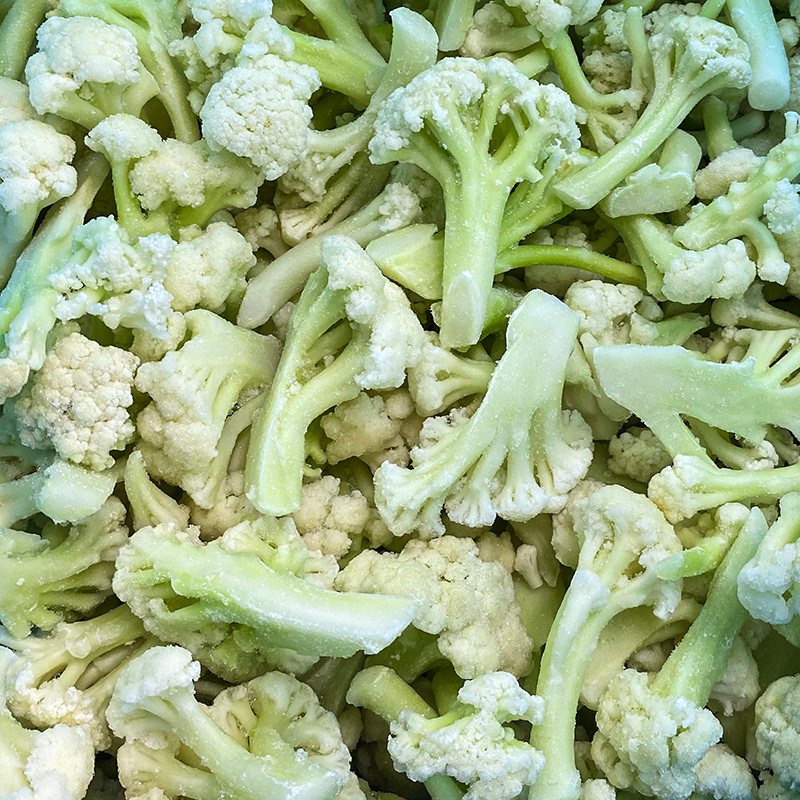
IQF stands for Individually Quick Frozen. Unlike block freezing, where cauliflower florets are frozen together into a solid mass, the IQF process freezes each floret separately at ultra-low temperatures — typically between −30°C and −40°C — using a blast or tunnel freezer. The result is free-flowing, individually separated florets that retain their natural shape, color, nutrients, and texture.
This technology was developed to bridge the gap between the quality of fresh produce and the convenience of frozen food. For IQF cauliflower specifically, the rapid freezing process prevents the formation of large ice crystals that would otherwise rupture the cell walls of the vegetable, causing mushiness and nutrient loss upon thawing.
IQF Cauliflower vs. Fresh vs. Block-Frozen: A Full Comparison
Understanding how IQF cauliflower stacks up against other formats is essential for procurement decisions. The table below provides a side-by-side comparison across the most critical dimensions for commercial buyers.
| Criteria | IQF Cauliflower | Fresh Cauliflower | Block-Frozen Cauliflower |
| Shelf Life | 18–24 months (frozen) | 7–14 days (refrigerated) | 12–18 months (frozen) |
| Texture After Cooking | Firm, near-fresh quality | Excellent (if fresh) | Soft, sometimes mushy |
| Prep Time (per kg) | Near zero — ready to cook | 15–25 minutes | Requires thawing/breaking |
| Usable Yield | ~95–98% | ~60–70% (after trimming) | ~85–90% |
| Nutritional Retention | High (rapid freeze locks nutrients) | Degrades over transit time | Moderate |
| Portion Flexibility | Excellent — use exact amounts | Moderate | Poor — must thaw whole block |
| Seasonal Availability | Year-round, consistent | Seasonal price fluctuation | Year-round |
| Food Safety Risk | Low — frozen at harvest peak | Higher — perishable | Low |
| Storage Space | Compact frozen storage | Chiller space required | Compact frozen storage |
Key Benefits of IQF Cauliflower for Restaurants
1. Dramatic Reduction in Kitchen Labor
In a commercial kitchen, labor is one of the highest variable costs. Fresh cauliflower requires washing, trimming, cutting into florets, and discarding the core and leaves — a process that takes skilled prep cooks considerable time per delivery. IQF cauliflower arrives already trimmed, cleaned, and portioned into uniform florets, eliminating this step entirely. High-volume kitchens handling multiple deliveries per week can reclaim hundreds of prep hours per year by switching to IQF cauliflower.
2. Consistent Portion Control and Reduced Waste
Because IQF cauliflower florets are free-flowing and individually separated, kitchen staff can scoop or weigh exactly the quantity needed for each dish without thawing an entire package. Unused florets go back into the freezer with no quality loss. This dramatically reduces food waste — a critical metric for both cost control and sustainability reporting. In contrast, once a block-frozen package is opened or fresh cauliflower is cut, the countdown to spoilage begins immediately.
3. Menu Stability Regardless of Season
Cauliflower is a seasonal vegetable. Fresh supplies peak in autumn and spring, and prices can spike significantly during off-season months. Restaurants that rely on fresh cauliflower for signature dishes — cauliflower steaks, cauliflower rice, roasted florets, soups — face menu inconsistency and cost volatility. IQF cauliflower provides a year-round supply at predictable contract prices, allowing menu engineering and accurate food cost budgeting across all seasons.
4. Near-Fresh Taste and Texture
A common misconception is that frozen vegetables are inferior in quality to fresh. With IQF cauliflower, harvested at peak maturity and frozen within hours, the nutritional profile and cellular structure are better preserved than fresh cauliflower that has been transported and stored for days. When cooked correctly — roasted at high heat, steamed briefly, or blanched — IQF cauliflower delivers a texture and flavor virtually indistinguishable from fresh-cut.
Why Food Manufacturers Prefer IQF Cauliflower
1. Streamlined Production Line Integration
For factories producing ready meals, frozen vegetable blends, meal kits, soups, or plant-based products, raw ingredient quality and uniformity directly impact line efficiency. IQF cauliflower delivers consistent floret sizing (available in multiple standard cut sizes: small, medium, large, and riced), which eliminates variability in portioning machinery and ensures uniform cook times during factory processing. Reduced manual intervention on the production line translates directly to lower manufacturing costs and higher throughput.
2. Superior Ingredient Traceability
Modern food manufacturing demands complete ingredient traceability for regulatory compliance and consumer transparency. Reputable IQF cauliflower suppliers provide full lot traceability documentation — from the specific farm fields where the crop was harvested, to the processing plant, to the shipment batch. This makes HACCP compliance, third-party audits, and recall procedures far more manageable than sourcing equivalent volumes of fresh produce from multiple local suppliers.
3. Extended Raw Material Buffer for Production Planning
A 18–24 month frozen shelf life means manufacturers can purchase IQF cauliflower in bulk during harvest surplus periods at the lowest market prices, building inventory buffers that smooth production planning over many months. This strategic purchasing model is simply not possible with fresh cauliflower, which must be processed within days of arrival.
4. Versatility Across Product Applications
IQF cauliflower is one of the most versatile frozen vegetable ingredients in food manufacturing. Current applications include:
- Cauliflower rice — a staple in low-carb and keto ready meals
- Frozen vegetable medleys — mixed with broccoli, carrots, and peas
- Soup and sauce bases — pureed into creamy cauliflower soups
- Plant-based meat alternatives — used as a binder or filler ingredient
- Pizza crusts and flatbreads — cauliflower-based low-carb alternatives
- Baby food and purees — nutrient-dense, naturally mild flavor
- Meal kit components — pre-portioned florets for home cooking kits
- Airline and hospital catering — consistent sizing for large-batch service
Nutritional Value of IQF Cauliflower
One of the strongest selling points of IQF cauliflower to health-conscious restaurant menus and clean-label food manufacturers is its outstanding nutritional profile. The rapid IQF freezing process locks in vitamins and minerals at the moment of harvest peak — often resulting in better nutritional retention than fresh cauliflower that has traveled days through the supply chain.
| Nutrient | Per 100g (cooked) | Health Benefit |
| Vitamin C | ~44mg (49% DV) | Immune support, antioxidant |
| Vitamin K | ~16µg (13% DV) | Bone health, blood clotting |
| Folate (B9) | ~57µg (14% DV) | Cell growth, prenatal health |
| Dietary Fiber | ~2g | Digestive health, satiety |
| Calories | ~25 kcal | Low-calorie, diet-friendly |
| Sulforaphane | Present | Anti-inflammatory, potential anti-cancer |
Quality Standards and Certifications to Look For
When sourcing IQF cauliflower for commercial use, procurement teams should evaluate suppliers against the following quality benchmarks:
- BRC Global Standard (BRCGS) — the leading food safety and quality certification recognized by major retailers worldwide
- IFS Food — widely required by European retailers and manufacturers
- GlobalG.A.P. — ensures good agricultural practices at the farm level
- HACCP compliance — systematic hazard analysis for food safety
- Organic certification (where applicable) — for premium organic IQF cauliflower product lines
- ISO 22000 — international food safety management system standard
Premium IQF cauliflower suppliers will typically hold multiple of these certifications simultaneously. Always request Certificate of Analysis (CoA) documentation covering pesticide residue testing, microbiological testing, and nutritional analysis for each production lot.
True Cost Analysis: IQF Cauliflower vs. Fresh
Many buyers focus on the sticker price per kilogram and assume fresh cauliflower is cheaper than IQF cauliflower. This comparison is misleading. A true cost analysis must account for usable yield, labor, waste, and supply chain risk. Below is a representative example for a restaurant purchasing 100kg of usable cauliflower per week:
| Cost Factor | Fresh Cauliflower | IQF Cauliflower |
| Raw purchase needed for 100kg yield | ~150kg (65% yield) | ~103kg (97% yield) |
| Approximate purchase price/kg | $0.90 (seasonal average) | $1.40 (stable contract) |
| Raw ingredient cost | $135.00 | $144.20 |
| Prep labor (@ $18/hr) | $54.00 (3 hrs) | $0.00 |
| Spoilage/waste cost (est.) | $18.00 (~10%) | $2.00 (~1%) |
| Total weekly real cost | $207.00 | $146.20 |
* Figures are illustrative estimates based on typical commercial pricing structures. Actual costs will vary by region, supplier, and contract volume.
Popular Menu and Product Applications for IQF Cauliflower
Restaurant Menu Inspirations
- Whole roasted cauliflower steak — a premium plant-based centerpiece dish
- Cauliflower rice bowls — low-carb alternative in health-focused concepts
- Creamy cauliflower soup — consistent batch results with IQF florets
- Buffalo cauliflower bites — trending appetizer with strong margin
- Cauliflower tikka masala — Indian-inspired vegetarian entrée
- Gratin and baked casseroles — comfort food staples in casual dining
Food Manufacturing Product Lines
- Low-carb frozen meal ranges — keto-friendly cauliflower rice dishes
- Clean-label vegetable soups — minimal ingredient declarations
- Organic baby food pouches — single-ingredient or blended purees
- Gluten-free pizza bases — cauliflower-based crust alternatives
- Frozen vegetable stir-fry mixes — retail and foodservice bags
- Meal kit boxes — pre-portioned ingredients for home cooking
Frequently Asked Questions About IQF Cauliflower
Q: Is IQF cauliflower as nutritious as fresh cauliflower?
A: In many cases, yes — and sometimes more so. IQF cauliflower is frozen within hours of harvest at peak ripeness, locking in vitamins, minerals, and antioxidants. Fresh cauliflower purchased at a restaurant supplier may have traveled 3–7 days from field to kitchen, during which nutrient degradation occurs. Multiple peer-reviewed studies support the conclusion that frozen vegetables can match or exceed fresh in nutritional value.
Q: How should IQF cauliflower be stored and handled?
A: IQF cauliflower must be stored continuously at −18°C or below. Once thawed, it should be treated like fresh produce and used within 24–48 hours. Do not refreeze thawed product. In kitchen operations, the free-flowing nature of IQF cauliflower allows staff to pour out only what is needed and return the bag to the freezer immediately, preserving the remaining product indefinitely.
Q: What sizes and cuts of IQF cauliflower are available?
A: Standard commercial offerings include florets in small (20–40mm), medium (40–60mm), and large (60–80mm) sizing, as well as IQF cauliflower rice (granulated or roughly chopped), sliced cauliflower for steaks, and mashed cauliflower. Buyers can specify size grades based on their end application — florets for roasting, rice-cut for grain alternatives, or small florets for soup production.
Q: Can IQF cauliflower be used directly from frozen without thawing?
A: Yes — and for most cooking applications, this is the recommended approach. Adding IQF cauliflower directly to a hot pan, oven, steamer, or boiling liquid gives better texture results than thawing first, which can make the florets waterlogged and soft. Direct-from-frozen cooking is one of the key operational advantages of IQF cauliflower over block-frozen formats.
Q: Is organic IQF cauliflower available for manufacturers?
A: Yes. A growing number of processing facilities offer certified organic IQF cauliflower processed under organic-compliant conditions with full chain-of-custody documentation. Organic IQF commands a price premium of 30–60% over conventional, but demand from organic ready-meal brands, health food retailers, and baby food manufacturers continues to grow strongly year on year.
Q: What volumes are typically available for commercial procurement?
A: IQF cauliflower is typically available in foodservice cases of 10kg or 20kg bags, and in bulk pallet quantities of 500kg–20,000kg per shipment for manufacturers. Long-term supply contracts are common in the food manufacturing sector, allowing buyers to lock in pricing and supply allocation ahead of the growing season.
Sustainability Advantages of IQF Cauliflower
Sustainability has become a core procurement criterion for many restaurant chains and food manufacturers responding to ESG commitments and consumer pressure. IQF cauliflower supports sustainability goals in several measurable ways:
- Lower food waste — near-zero spoilage rate compared to fresh produce
- Reduced field-to-fork waste — processing captures the entire usable crop, including sizes rejected by fresh markets
- Optimized cold chain logistics — frozen shipping is more energy-efficient per usable kg delivered than refrigerated fresh transport
- Seasonal production alignment — bulk purchasing during harvest aligns demand with natural growing cycles, reducing the need for energy-intensive out-of-season growing
- Reduced packaging waste — high-density frozen packing requires less packaging material per usable kilogram than fragile fresh packaging
Conclusion: The Commercial Case Is Clear
The evidence across every operational dimension — cost, quality, convenience, safety, nutrition, and sustainability — points to the same conclusion: IQF cauliflower is the superior choice for restaurants and food manufacturers over both fresh and block-frozen alternatives.
For restaurant operators, IQF cauliflower means less prep labor, less waste, more consistent dishes, and predictable food costs year-round. For food manufacturers, it means streamlined production, better traceability, strategic inventory management, and versatile application across a rapidly growing range of health-oriented product categories.
As consumer demand for plant-based, low-carb, clean-label, and sustainably sourced food products continues its upward trajectory, IQF cauliflower sits at the intersection of all these trends — a premium, functional ingredient that delivers operationally and commercially. Businesses that build IQF cauliflower into their supply chain today are better positioned to scale efficiently, respond to menu trends, and meet the evolving expectations of health-conscious consumers worldwide.