

 English
 中文简体
中文简体 日本語
日本語
Content
- Are Frozen Leafy Vegetables Really Less Nutritious Than Fresh Ones?
- How Large Is the Market Scale of Frozen Leafy Vegetables?
- What Is the Export Situation of Frozen Leafy Vegetables?
- Are There New Breakthroughs in Frozen Leafy Vegetable Technology?
- What Misunderstandings Do Consumers Have About Frozen Leafy Vegetables?
- What Impact Do Frozen Leafy Vegetables Have on the Environment?
- How to Choose Frozen Leafy Vegetables?
- How to Properly Consume Frozen Leafy Vegetables?
Are Frozen Leafy Vegetables Really Less Nutritious Than Fresh Ones?
In the fresh produce and frozen food sections of supermarkets, many consumers subconsciously reach for fresh leafy vegetables with water droplets, while keeping a distance from frozen products nearby. Behind this choice lies a deep-rooted perception among most people - Frozen Leafy Vegetables, after undergoing low-temperature treatment, lose a large amount of nutrients and may even produce substances harmful to health, making them far less "nutritious" than fresh vegetables. People generally believe that only vegetables just picked from the ground, with a whiff of soil, are the best carriers of nutrients, and the freezing process seems to suck away the nutrients of vegetables like a "vampire".
However, a consumer protection committee in a certain region once conducted a comparative test on Frozen Leafy Vegetables and fresh leafy vegetables, and the results, like a stone thrown into a calm lake, overturned many people's views. The test selected various common leafy vegetables such as spinach, broccoli, and lettuce, and carefully tested their key components such as vitamin C, B vitamins, dietary fiber, and nitrites.
From the test data, in terms of vitamin C content, the retention rate of frozen spinach was much higher than that of fresh spinach stored for 3 days. It should be noted that vitamin C is a water-soluble vitamin, extremely unstable, and easily oxidized and destroyed during the storage of fresh vegetables. Frozen spinach, due to rapid freezing, seems to have been pressed the "pause button", effectively preventing the loss of vitamin C. The difference in B vitamins is even more obvious. After being stored for a week, the content of vitamin B6 in frozen broccoli still remained at a high level, while that in fresh broccoli under the same conditions was significantly reduced. Vitamin B6 plays an important role in human metabolism, and its content directly affects the nutritional value of vegetables.
In terms of nitrite content, both did not exceed the national standards, and due to rapid freshness locking, the formation rate of nitrites in Frozen Leafy Vegetables was slower than that in fresh vegetables. Nitrite is a potential harmful substance. During the storage of fresh vegetables, due to the action of bacteria, nitrates will gradually be converted into nitrites. The longer the storage time, the higher the nitrite content may be. The frozen environment can inhibit the reproduction of bacteria, thereby slowing down this conversion process.
|
Vegetable Type |
Test Item |
Frozen Vegetables (Stored for One Week) |
Fresh Vegetables (Stored for One Week) |
|
Spinach |
Vitamin C Retention Rate |
Relatively High |
Relatively Low (Much Lower Than Frozen Spinach) |
|
Broccoli |
Vitamin B6 Content |
Maintained at a High Level |
Significantly Reduced |
|
Various Vegetables |
Nitrite Formation Rate |
Relatively Slow |
Relatively Fast |
From a scientific perspective, after being picked, although fresh vegetables are separated from their parent plants, their cells are still engaged in active respiration and will continuously consume their own nutrients. Especially unstable components like vitamins have a significant daily loss rate at room temperature, just like a balloon with a slow leak, losing nutrients unconsciously. Frozen vegetables, on the other hand, undergo low-temperature treatment shortly after being picked. Through ultra-low temperature quick freezing, the water in the vegetable cells can instantly form tiny ice crystals. These tiny ice crystals will not pierce the cells, thus maximizing the retention of nutrients in the cells, like putting a "protective coat" on the vegetables.
In addition, fresh vegetables go through multiple handling and cleaning processes during transportation and sales, especially pre-washed and cut vegetables. Their cell walls are damaged, making it easier for nutrients inside the cells to leak into the external environment, and the rate of nutrient loss will significantly accelerate. Frozen vegetables, however, are immediately sealed and packaged after processing, reducing contact with air and moisture, further delaying nutrient loss, and allowing the nutrients in the vegetables to be preserved for a longer time.
How Large Is the Market Scale of Frozen Leafy Vegetables?
The global market for Frozen Leafy Vegetables is expanding steadily, and its scale has long exceeded people's imagination, just like a growing tree with luxuriant branches and leaves, covering an increasingly wide range. In recent years, the global market for Frozen Leafy Vegetables has shown a growing trend, which is not a flash in the pan but has a solid foundation. According to industry research institutions, this growth trend is expected to continue in the next few years, with a reasonable compound annual growth rate, showing the strong vitality of the market.
This growth trend is reflected in various regions, whether in mature markets such as North America and Europe, or in emerging markets such as Asia and South America, the demand for Frozen Leafy Vegetables is constantly rising. In mature markets, consumers have a high acceptance of frozen food, and with the fast pace of life, Frozen Leafy Vegetables, with their convenience and good nutrient retention, have become regulars on family dining tables. In emerging markets, with the development of the economy and the improvement of residents' living standards, people's demand for convenient and healthy food is also increasing, providing a broad space for the growth of the Frozen Leafy Vegetables market.
The performance of the Chinese market is also eye-catching, like a rising star emitting dazzling light. In the past few years, the scale of China's Frozen Leafy Vegetables market has shown a rapid growth trend, and it is expected to maintain this trend in the next few years, with a considerable average annual growth rate. This rapid growth is due to the joint action of multiple factors.
With the improvement of residents' living standards, health awareness has also increased, and people's demand for vegetables has shifted from "having them" to "having good ones". Frozen leafy vegetables are gradually favored because of their good nutrient retention and convenience in consumption. Consumers are no longer just satisfied with being able to eat vegetables, but pay more attention to the nutritional components of vegetables and the convenience of consumption, and frozen leafy vegetables just meet these needs.
At the same time, the acceleration of urbanization has made people's pace of life faster and faster. Office workers, young families and other groups face busy work and life pressure every day and do not have much time to spend on food preparation. Frozen leafy vegetables do not require long-time cleaning and sorting, which can greatly save cooking time, bring convenience to their lives, and become a helpful assistant in their kitchens.
In addition, the national policy support for the agricultural industry and the continuous innovation of freezing technology have also provided a strong support for the development of the frozen leafy vegetable market. Policy support has created a good environment for the development of the industry, while technological innovation has improved the quality of frozen leafy vegetables, making more consumers willing to choose frozen leafy vegetables.
What Is the Export Situation of Frozen Leafy Vegetables?
Many regions in China, relying on superior natural conditions and mature processing technology, have achieved good results in the export of Frozen Leafy Vegetables, just like excellent players showing their strength on the international stage. Some regions, relying on their local pollution-free ecological environment, vigorously develop green vegetable cultivation. The soil here is fertile, the water quality is excellent, and the air is fresh, providing unique conditions for the growth of vegetables. The produced frozen spinach, broccoli and other products are sold overseas with excellent quality and have won the recognition of foreign consumers.
Some regions, relying on a sound cold chain logistics system, send a large number of Frozen Leafy Vegetables to countries such as Japan and South Korea. From the rapid pre-cooling after vegetable picking, to the temperature control during transportation, and then to the storage after arriving at the destination, each link has strict standards to ensure that the quality of Frozen Leafy Vegetables is not affected during transportation.
Some frozen vegetable processing enterprises in other regions export their products to markets such as Russia and the European Union through standardized production. These enterprises have established a sound quality management system, with strict standards and specifications for every link from the procurement of raw materials to production and processing, ensuring the quality stability of products.
The exported frozen leafy vegetables are rich in variety, including not only common spinach, broccoli and lettuce, but also characteristic varieties such as shepherd's purse and amaranth. These characteristic varieties occupy a place in the international market due to their unique flavor and nutrition. The main export destinations are concentrated in Japan, South Korea, Southeast Asia and some countries and regions in Europe and America. These countries and regions have high requirements for food quality, and have strict testing standards for indicators such as pesticide residues and microorganisms in frozen leafy vegetables, just like strict checkpoints, and only products that meet the standards can enter the market.
Export enterprises also face many challenges when facing the strict requirements of the international market. Taking the Japanese market as an example, it has hundreds of testing items for pesticide residues, with extremely strict standards, and any unqualified indicator may lead to product rejection. To cope with this challenge, enterprises strictly control the planting link from the source. They select high-quality seeds, which have the characteristics of strong disease resistance, high yield and good quality; adopt green planting technologies, reduce the use of pesticides and chemical fertilizers, and use more organic fertilizers and biological control methods to ensure the safety of vegetables.
In the processing link, enterprises introduce advanced testing equipment to conduct comprehensive testing on each batch of products, strictly screening indicators such as pesticide residues, heavy metals and microorganisms to ensure that they meet the standards of importing countries. At the same time, enterprises also actively cooperate with scientific research institutions to develop more efficient pesticide residue degradation technologies and improve product quality. In addition, some enterprises have established long-term cooperative relations with foreign importers to keep abreast of market demand and standard changes, and adjust production strategies to adapt to the requirements of different markets.
Customs and other departments also provide strong support for the export of frozen leafy vegetables. By optimizing customs clearance procedures, simplifying customs clearance formalities, improving customs clearance efficiency, reducing the detention time of goods at ports, and ensuring the freshness of products. At the same time, the customs will timely release relevant standards and regulations of importing countries to enterprises, guide enterprises to do a good job in response, help enterprises avoid trade risks, and escort the export of frozen leafy vegetables.
Are There New Breakthroughs in Frozen Leafy Vegetable Technology?
Traditional freezing technology has played an important role in preserving frozen leafy vegetables, just like a loyal guardian silently protecting the quality of vegetables. Ultra-low temperature quick freezing technology is a representative of them. It can reduce the temperature of vegetables to a low level in a short time, allowing the water in the vegetable cells to quickly freeze into tiny ice crystals. These tiny ice crystals are small in size and large in quantity, and will not pierce the cell structure, thus maintaining the taste and nutrition of vegetables. If the ice crystals are too large, they will cut the cells like sharp knives, leading to the loss of juice in the cells, and the taste and nutrition of vegetables will also be affected.
Vacuum packaging can isolate air and prevent vegetables from oxidative deterioration. Oxygen in the air will oxidize nutrients such as vitamins in vegetables, and also promote the reproduction of microorganisms, leading to vegetable deterioration. Vacuum packaging 抽出 the air in the package, creating an oxygen-free environment, which can effectively extend the shelf life of products.
In recent years, Frozen Leafy Vegetables technology has made continuous new breakthroughs, and "frozen green preservation technology" is one of the innovative achievements, injecting new vitality into the Frozen Leafy Vegetables industry. This technology is mainly applicable to leafy vegetables such as spinach and rape, and its technical highlight is that it can effectively maintain the green color of vegetables.
Green leafy vegetables treated by traditional freezing technology are prone to discoloration during storage and heating. The originally green leaves will turn yellowish-brown, affecting the appearance and taste. This is because chlorophyll in vegetables will decompose under high temperature, light and other conditions, and traditional freezing technology cannot effectively prevent this process.
The "frozen green preservation technology" can inhibit the decomposition of chlorophyll through special pre-treatment of vegetables before freezing, combined with specific freezing parameters. The pre-treatment process may include the use of some natural color protectants, which can combine with chlorophyll to enhance its stability; specific freezing parameters can further lock the green color of vegetables, so that vegetables can still maintain a bright green color after freezing, storage and cooking. This technology not only improves the appearance quality of products, making consumers more willing to buy, but also better retains the flavor of vegetables, and is applicable to various scenarios such as catering enterprises and home cooking.
Technological progress has had a profound impact on the quality and market of frozen leafy vegetables. On the one hand, the nutrients of products are more fully retained, and the taste is closer to that of fresh vegetables, which improves consumers' acceptance. In the past, many consumers refused to buy frozen vegetables because of their poor taste, but now, with the progress of technology, the taste of frozen vegetables has been greatly improved, and more and more people have begun to accept and love frozen leafy vegetables.
On the other hand, the application of new technologies has further extended the shelf life of frozen leafy vegetables and expanded the sales radius. In the past, due to the short shelf life, frozen leafy vegetables could only be sold locally or in surrounding areas, but now, with a longer shelf life, they can be transported to farther places, helping enterprises explore a broader market.
At the same time, technological innovation has also promoted the upgrading of the industry, prompting enterprises to continuously improve production efficiency and product quality. In order to apply new technologies, enterprises need to invest funds in equipment renewal and personnel training, which to a certain extent raises the threshold for industry entry, promotes the survival of the fittest in the industry, and enhances the competitiveness of China's frozen leafy vegetables in the international market.
Moreover, some emerging technologies are exploring the combination of freezing with bioactive substance preservation, aiming to lock in not only basic nutrients but also beneficial phytochemicals in leafy vegetables, adding more health value to the products. Additionally, intelligent freezing control systems are being developed, which can adjust freezing parameters in real-time according to the characteristics of different leafy vegetables, further optimizing the preservation effect.
What Misunderstandings Do Consumers Have About Frozen Leafy Vegetables?
Although Frozen Leafy Vegetables have many advantages, consumers still have some misunderstandings about them. These misunderstandings are like a layer of fog, making people unable to see the true face of Frozen Leafy Vegetables.
Many people think that Frozen Leafy Vegetables are synonymous with "not fresh", and feel that they are all made from leftover vegetables. In their imagination, the vegetables used to make frozen vegetables are those with poor appearance and about to rot, so they have no nutrition at all. In fact, this idea is quite different from the facts. The raw materials used to make Frozen Leafy Vegetables are often picked when the vegetables are of the best quality.At this time, the nutritional components of the vegetables are the most abundant and the taste is the best. After that, these vegetables will be transported to processing enterprises in a short time, cleaned, cut and other treatments, and then quickly frozen. This series of processes are carried out under strict time and temperature control, maximizing the retention of their freshness and nutrition, and even fresher than those "fresh" vegetables that have undergone long-term transportation and storage.
Many consumers are also worried that a large number of preservatives are added to frozen leafy vegetables during processing. They think that the reason why frozen vegetables can be preserved for so long is that they must have added many harmful preservatives. In fact, this worry is unnecessary. Frozen leafy vegetables mainly rely on low temperature to inhibit the growth and reproduction of microorganisms, so as to achieve the purpose of preservation. In a low-temperature environment, the activities of microorganisms are greatly restricted and cannot reproduce in large numbers, so vegetables are naturally not easy to deteriorate. Frozen leafy vegetables produced by regular enterprises usually do not need to add preservatives, and can be preserved for a long time through freezing technology. Moreover, the state has strict regulations on the use of food additives. Even if there are a small amount of additives, they will be within a safe range and will not cause harm to human health, so consumers do not need to worry too much.
In addition, some people feel that the taste of frozen leafy vegetables is far inferior to that of fresh vegetables. When cooking frozen leafy vegetables, they often feel that the vegetables are soft and have no chewiness, which is far from the crisp and tender taste of fresh vegetables. It is undeniable that some frozen leafy vegetables have certain differences in taste from fresh vegetables, which is mainly because during the freezing process, the vegetable cells may be damaged to a certain extent, leading to the loss of juice in the cells. However, with the continuous progress of freezing technology, this difference is gradually narrowing. Now, ultra-low temperature quick freezing technology and some new pre-treatment technologies can minimize cell damage and maintain the taste of vegetables. Moreover, different cooking methods can also improve the taste of frozen leafy vegetables. For example, stir-frying quickly can keep them crisp to a certain extent, and boiling soup can make them more soft and tasty, meeting the taste needs of different people.
What Impact Do Frozen Leafy Vegetables Have on the Environment?
From an environmental perspective, Frozen Leafy Vegetables have certain advantages over fresh vegetables in some aspects, just like an environmental protection guard who knows better how to save resources, contributing to environmental protection.
Fresh vegetables need to be kept in a low-temperature environment during transportation, which usually requires the use of refrigerated trucks and other equipment, and the operation of these equipment consumes a lot of energy. Moreover, due to the short shelf life of fresh vegetables, they are prone to loss if not handled carefully during transportation, resulting in more waste. These wastes not only waste resources, but also may pollute the environment. Frozen Leafy Vegetables, however, have a longer shelf life, and the requirements for cold chain during transportation are relatively low. They do not need to maintain extremely low temperatures throughout the process like fresh vegetables, so energy consumption is less. At the same time, the loss rate of frozen leafy vegetables is also low, which can reduce the waste of resources and make full use of every portion of vegetables.
In terms of storage, fresh vegetables need to be stored under specific temperature and humidity conditions, otherwise they are prone to rot and deterioration. To meet these conditions, storage places need to be equipped with air conditioners, humidifiers and other equipment, which also consume a certain amount of energy. Moreover, even under such conditions, the storage time of fresh vegetables is limited, and some will still be wasted due to improper storage. Frozen leafy vegetables only need to be stored in a frozen environment, and the storage conditions are relatively simple, only need to keep low temperature, without complex humidity control and other equipment. Moreover, frozen leafy vegetables can be stored for a long time, reducing the waste of vegetables caused by improper storage, and saving resources from another angle.
However, the production process of frozen leafy vegetables also consumes energy. For example, the freezing link needs a lot of electricity to maintain the low-temperature environment, which is one aspect of its impact on the environment. But generally speaking, considering transportation, storage and loss, frozen leafy vegetables have certain potential in terms of environmental friendliness.
With the wide application of renewable energy and the continuous development of energy-saving technologies, the energy consumption in the production process of frozen leafy vegetables will be further reduced. For example, some enterprisesare beginning to use renewable energy sources such as solar and wind energy to power freezing equipment, reducing reliance on traditional fossil fuels; energy-efficient freezing equipment is also constantly emerging, which can reduce energy consumption while ensuring freezing efficiency. These measures will make the environmental impact of frozen leafy vegetables even smaller, allowing them to better protect our planet while providing convenience and nutrition to people.
How to Choose Frozen Leafy Vegetables?
When buying Frozen Leafy Vegetables, mastering the correct selection methods can help us choose products of better quality. Here are some practical and detailed tips for selection:
First, observe the packaging meticulously. The packaging of high-quality Frozen Leafy Vegetables should be intact in every aspect, without any signs of damage, air leakage, or expansion. Even a tiny pinhole in the packaging can allow air to seep in, which will cause the vegetables to oxidize gradually. This oxidation not only fades the color of the vegetables but also leads to the loss of nutrients, and in severe cases, it may even breed harmful bacteria. If the packaging is swollen, it is likely that the internal bacteria have multiplied and produced gas, indicating that the vegetables have deteriorated, so such products must be avoided.
At the same time, pay attention to the material of the packaging. High-quality frozen leafy vegetables are usually packaged in thick, durable plastic or composite materials that are resistant to low temperatures. These materials can better prevent the penetration of air and moisture, ensuring the stability of the vegetables during storage. In contrast, thin or easily torn packaging is more likely to be damaged, increasing the risk of quality problems.
In addition, choose products with complete and clear information on the packaging. The information should include not only the basic product name, ingredient list, production date, shelf life, and storage conditions but also detailed content such as the place of origin of the vegetables, the freezing method used (such as ultra-low temperature quick freezing), and quality certification marks (if any). The ingredient list is particularly important; it should be simple, with only the name of the leafy vegetable itself, without unnecessary additives. These details can help us have a more comprehensive understanding of the product and better judge whether it meets our needs and expectations.
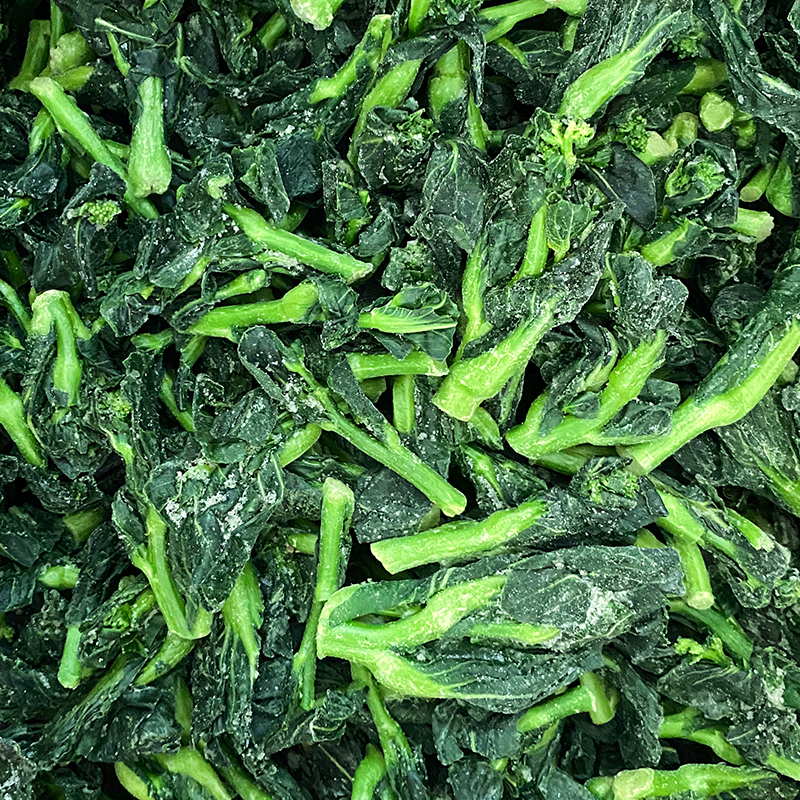
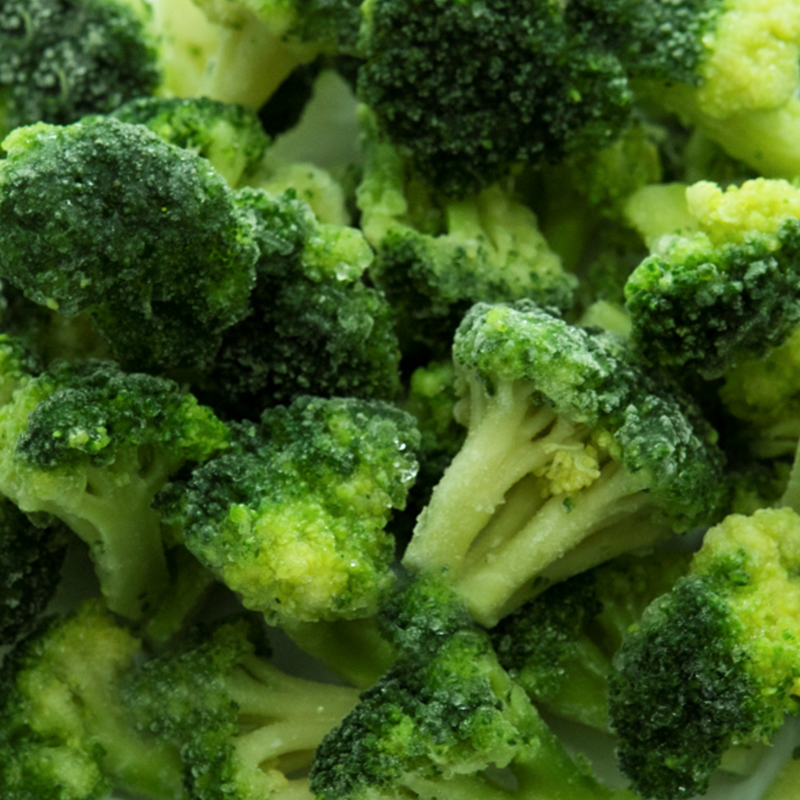
Second, check the appearance carefully. Observe the state of the vegetables through the transparent part of the packaging. High-quality frozen leafy vegetables should have a natural and bright color that is consistent with the inherent color of the vegetable. For example, fresh frozen spinach should show a vibrant dark green, with no signs of yellowing or browning; broccoli should be a bright emerald green, and the small flowers should be tightly clustered. If the color of the vegetables is dull, has a yellowish tint, or has irregular spots, it may indicate that problems occurred during processing, such as delayed freezing after picking, which caused the vegetables to deteriorate, or improper storage conditions that led to quality degradation.
In addition to color, pay close attention to whether the vegetables have obvious ice crystals or frost. A thin layer of ice crystals on the surface of the vegetables is normal, as it is formed during the freezing process. However, if there are thick, large ice crystals or a layer of white frost, it is likely that the product has undergone repeated freezing and thawing. This repeated temperature change will cause the cell walls of the vegetables to rupture, leading to the loss of nutrients and moisture. When cooked, such vegetables will have a soft and mushy texture, greatly affecting the taste.
Also, observe the shape of the vegetables. The leaves of high-quality frozen leafy vegetables should be relatively intact, without excessive crushing or breaking. Although some cutting is inevitable during processing, a large number of broken pieces may indicate rough processing or improper handling during transportation, which may also affect the quality of the vegetables.
Third, pay special attention to the production date and shelf life. Although frozen leafy vegetables can be stored for a relatively long time under proper freezing conditions, the fresher the product, the better the retention of nutrients and taste. Therefore, try to choose products with a recent production date. Generally, it is advisable to select products that are within 3-6 months of production, as the quality of products beyond this period may gradually decline.
At the same time, carefully check the shelf life and the recommended storage conditions. Different brands of frozen leafy vegetables may have different shelf lives, usually ranging from 12 to 24 months, depending on the variety of vegetables and the freezing technology used. It is crucial to ensure that the product is consumed within the shelf life. Moreover, the shelf life is based on the premise of proper storage. If the product has not been stored according to the recommended conditions (such as being stored at a temperature higher than -18℃ for a long time), its actual quality may have deteriorated even if it is within the shelf life. Therefore, when purchasing, also check the temperature of the freezer in the store to ensure that it is maintained at the appropriate low temperature (usually around -18℃), which can indirectly reflect the quality of the product's storage and transportation process.
Finally, choose regular and reliable purchase channels. It is recommended to buy frozen leafy vegetables in large supermarkets, well-known shopping malls, or regular e-commerce platforms with good reputations. These channels usually have strict supplier selection standards and perfect cold chain logistics systems. They can ensure that the frozen leafy vegetables are transported and stored under proper temperature conditions, reducing the risk of quality problems caused by improper handling.
In contrast, some small vendors or unknown markets may have inadequate cold chain facilities, and the frozen leafy vegetables sold there may have been exposed to high temperatures for a long time, resulting in repeated freezing and thawing. In addition, the source of products in these places is often unclear, making it difficult to trace the quality, increasing the hidden danger of food safety. Therefore, to ensure the quality and safety of the frozen leafy vegetables you buy, it is better to avoid purchasing products from unknown sources.
How to Properly Consume Frozen Leafy Vegetables?
Different Frozen Leafy Vegetables have slightly different handling methods, and mastering the correct handling methods can help frozen vegetables maintain better taste and nutrition.
|
Vegetable Type |
Pre-freezing Treatment Method |
Purpose |
|
Leafy vegetables such as spinach and celery leaves |
Blanch first, add a little salt and oil when blanching, then quickly cool with cold water and drain |
Make vegetables more colorful, remove some oxalic acid, and avoid sticking |
|
Mushrooms |
Clean, drain, and cut into appropriate sizes |
Remove impurities for easy access during cooking |
|
Onions |
Cut into shreds or diced |
Convenient for cooking, can be put into the pot directly without thawing |
For leafy vegetables, such as spinach and celery leaves, it is best to blanch them before freezing. Add a little salt and oil when blanching. Salt can make the cells of the vegetables shrink, reducing water loss, and at the same time, it can make the color of the vegetables more vivid; oil can form a protective film on the surface of the vegetables, preventing the loss of nutrients. The blanching time should not be too long, usually just a few tens of seconds, to avoid the vegetables becoming too soft and affecting the taste. After blanching, quickly cool with cold water to keep the vegetables crisp and tender, and also prevent them from continuing to be heated to avoid nutrient loss. Finally, drain the water, divide into small portions, put into fresh-keeping bags, and freeze in the refrigerator. This can prevent the vegetables from sticking together, making it convenient for future use.
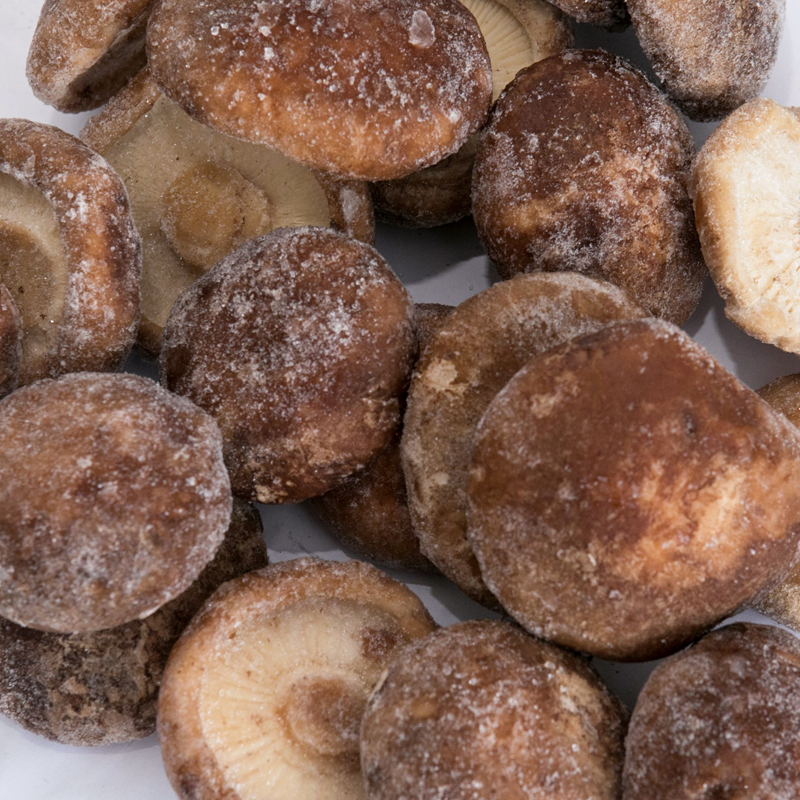
Mushrooms do not need to be blanched. They only need to be carefully cleaned with clean water to remove surface sediment and impurities, then drained and cut into appropriate sizes before directly freezing. If there is too much water on the surface of the mushrooms, they will easily form ice cubes after freezing, affecting the taste, so it is necessary to drain the water.
Onions can be cut into shreds or diced first, without blanching, and directly put into fresh-keeping bags for freezing. Onions treated in this way can be put into the pot directly without thawing during cooking, which is very convenient.
The method of thawing is also crucial. The correct thawing method can maximize the retention of nutrients and taste of vegetables. The best way is to take the frozen leafy vegetables out of the refrigerator in advance and put them in the refrigerator for natural thawing. This thawing method is slow, but it can allow the vegetable cells to gradually absorb water, reduce cell rupture, and thus retain more nutrients and better taste.
If time is tight, you can also thaw by soaking in cold water, but be careful not to let the vegetables soak in water for a long time to avoid nutrient loss. It should be noted that frozen leafy vegetables should not be thawed repeatedly. Repeated thawing will cause cell rupture, accelerate nutrient loss, and may also breed bacteria, affecting food safety. Therefore, it is important to divide into small portions when freezing, take one portion at a time, and avoid leftovers.
In terms of cooking, frozen leafy vegetables are suitable for quick stir-frying, making soup, making fillings, etc. When stir-frying quickly, there is no need to thaw, take them directly from the refrigerator and put them into the pot, stir-fry quickly over high heat, and add appropriate seasonings, which can reduce nutrient loss. When making soup, you can put frozen leafy vegetables when the soup is almost cooked, and cook for a few minutes until done. When making fillings, thaw and squeeze out the water, then mix with other ingredients, which can make the fillings more delicious. During the cooking process, be careful not to overheat, so as not to destroy the nutrients and taste of the vegetables.